
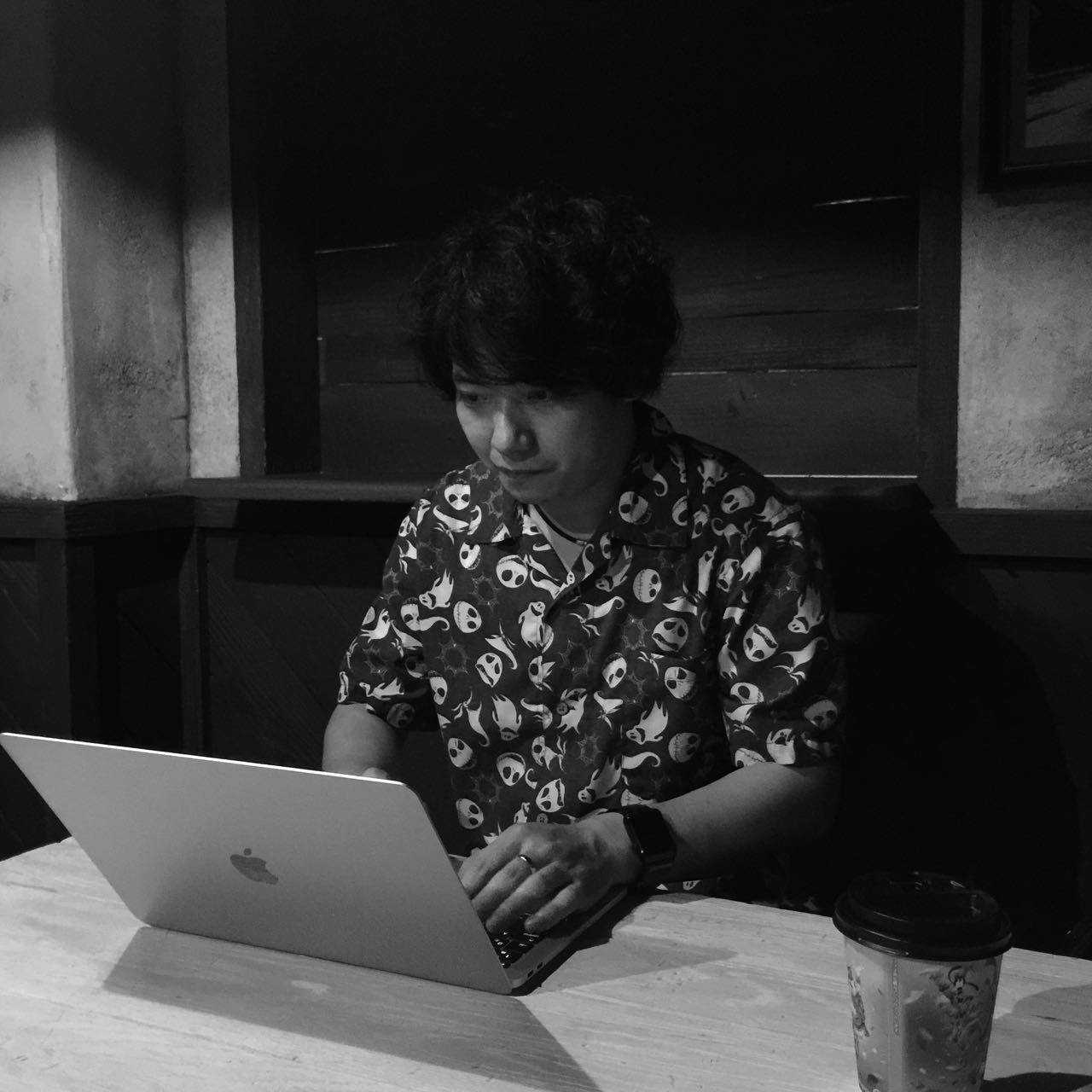
04 / Chizuru
千弦 Chizuru
From Inner Mongolia, China · Based in Japan
Composer · Music producer · System architect · Creator
Music and computing have never been separate paths. From a first composition written in QBASIC to symphonic works and music software, our practice has grown around finding ways to turn ideas into works.
01 / Music
Growing up where art was made
The starting point was a childhood in the artistic environment of the Inner Mongolia ethnic performing arts troupe. Meeting artists and learning music and instruments from an early age made art part of everyday life, rather than a distant idea. The wish to make original music began there, too.
Wind-instrument study began in primary school. Growing up around the troupe also brought sustained exposure to large-scale symphonic music: how different parts form a whole, how timbres respond to each other, and how a work unfolds through layers. Those experiences became an important foundation for the orchestral writing that followed.
Exploration continued with self-taught piano from age 20 and guitar from age 25. Each instrument brings a different physical relationship with sound and a different way of thinking about music, continuing to broaden how we listen and compose.
02 / Music × Computing
The first composition began in QBASIC
A chance encounter with computers in primary school began in the DOS era. Discovering BASIC and QBASIC led to a first musical composition, created in QBASIC. Music and programming met early: a computer could do more than execute instructions; it could become a means of expressing sound and ideas.
PLAY "T120 O4"
PLAY "C4 D4 E4 F4 E4 D4 C4 P4"Compared with trying an idea at the piano and then writing it into a score, QBASIC offered an immediate connection between writing and hearing. Notes and durations could be changed at any time, then played again to hear the difference. The revelation was that exploring an idea no longer had to wait for instrumental technique to catch up with imagination. Computing shortened the distance between conceiving music and hearing it.
In retrospect, this was an early experience of computer-based music-making. The attraction was not simply that a computer could produce sound, but the freedom to try, compare and revise. Alongside music, computing and programming became lasting subjects of study. What kind of sound to make, and how a tool could make that idea possible, increasingly became two sides of the same question.
That interest developed into work on DAWs—digital audio workstations—and audio plugins. Moving from using music tools to designing them brought creative needs into the software itself. This path from music into technology helped shape our approach to system architecture today.
03 / Composition
Let different sounds collide
Large-scale symphonic writing is a particular strength and an ongoing focus of our work. Guitar brings another kind of force. When the grain, impact and tension of a distorted electric guitar meet the layers and scale of an orchestra, we want more than one sound quietly decorating the other. We want both to speak fully.
The same possibility exists between Chinese and Japanese traditional music and Western musical traditions. Languages from different cultures, periods and disciplines do not have to lose their differences before they can share a work. Their distance, friction and responses can become part of its substance.
We do not rank instruments by origin, performance setting or genre. Orchestral depth and the edge of an electric guitar each offer something irreplaceable. The aim is not combination for its own sake, but a reason for every sound to participate—and music that is not confined by national borders or inherited categories.
04 / Architecture
Code is a work to be designed
In system design, we value high cohesion and low coupling: keeping closely related responsibilities together, while allowing different parts to cooperate through clear, narrow interfaces. A change in one place should not needlessly disturb the whole. Even complex functionality deserves a structure that can be understood.
We treat code as a creative work. Are its names precise? Are responsibilities clear? Could a better structure remove repetition? Will its relationships hold as it grows? These internal qualities deserve the same care as the interface a user directly experiences.
Musical parts, visual layers and cooperating software components offer different ways to consider the relationship between a whole and its parts. They do not follow identical rules, but they can inform one another. Music, art and development are not simply separate entries in a biography; they contribute together to our judgments and our work.
05 / Studio
A 5.9-tatami home studio
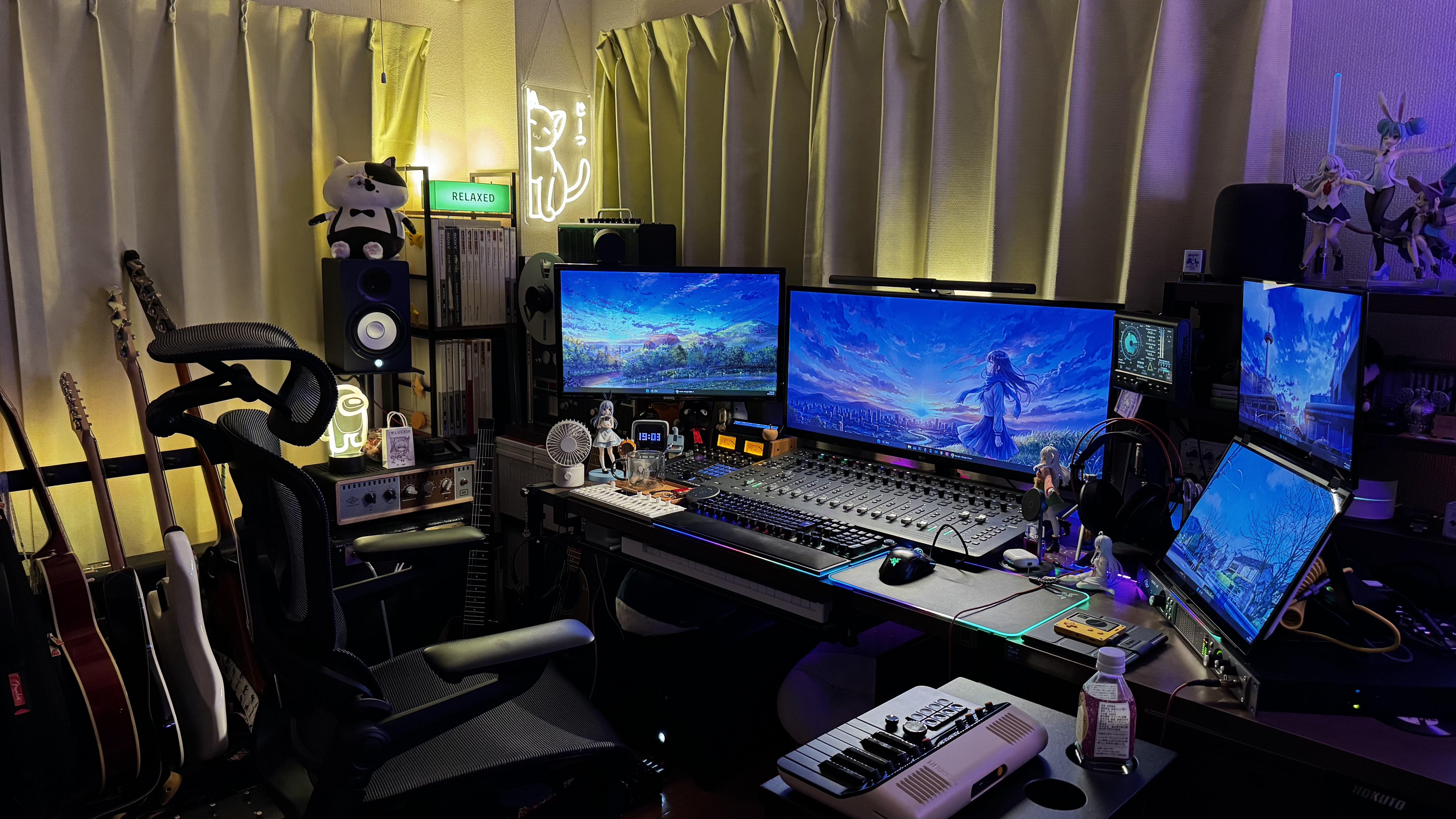
In a room measuring 5.9 tatami, instruments, monitor speakers, a control surface and computers share one creative space. Composition, music production and software development meet here: listening closely, playing and working with our hands, then using code to address needs that arise while making music. It is a small room that keeps these different ways of working close together.
Creator is an identity we want to keep: not limiting ourselves to one medium, but continuing to learn, so that sound, form and structure can all become languages of expression.