CHARACTER DESIGN

Creative.Art Direction
Art Direction
Character silhouettes, clothing textures, composition and light. From real landmarks to imagined streets, visual design gives each work its own identity.
CREATIVE.ART DIRECTION / TIDEMARKS OF SUMMER
Sea breezes, streetlights and the space between people.
PORTRAIT RECORDS
Portrait Records
SCENE DESIGN
Scene Design
TOWNSCAPE ARCHIVE
Townscape Archive
Explore the ideas behind this summer through its people, clothing and places. The story’s discoveries await you in the game.
Real textures, imagined places.
Every image begins with a character’s viewpoint and the scene’s emotional tone. With real places, architectural and cultural features inform what enters the frame and where the eye comes to rest. We design composition, the moment of light, color emphasis and layers of depth to create our own anime backgrounds. In fictional Shiomi, universities and shops, those visual decisions extend to inventing the spaces themselves. Art direction shapes both observed and imagined places.
01 / MAIN STORY · CHARACTER & WARDROBE
Main story | Tidemarks of Summer
WARDROBE STUDIES
A wardrobe for a life

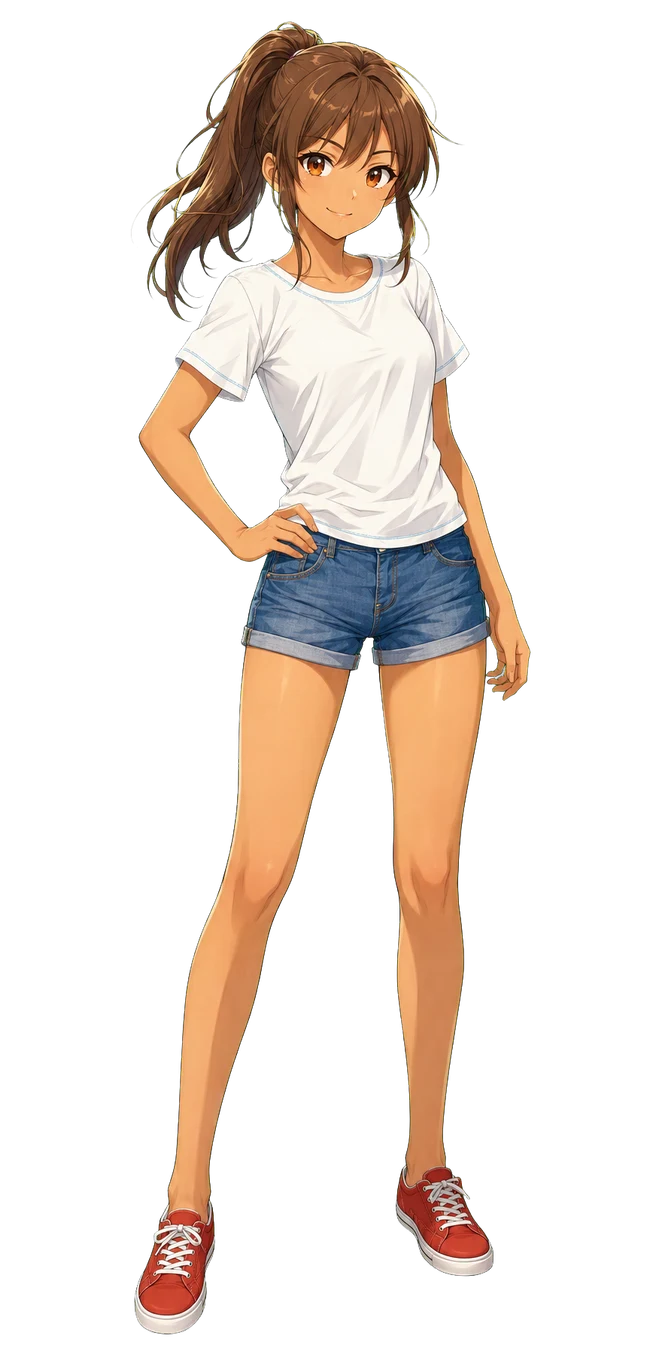
Everyday Outfit
Mio Asakura
A white tee, denim shorts and red sneakers establish Mio’s ready-to-run everyday look.
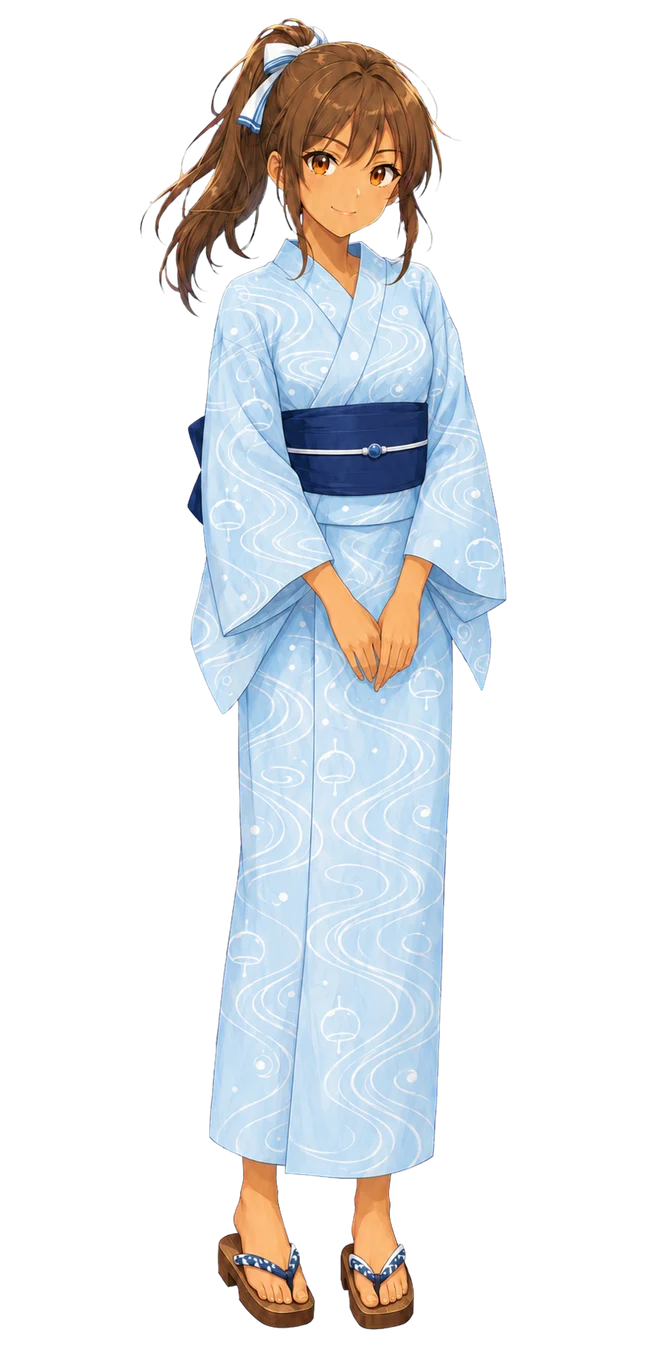
Pale Blue Yukata
Mio Asakura
Pale blue and wind-chime-like motifs retain summer brightness in a quieter silhouette.
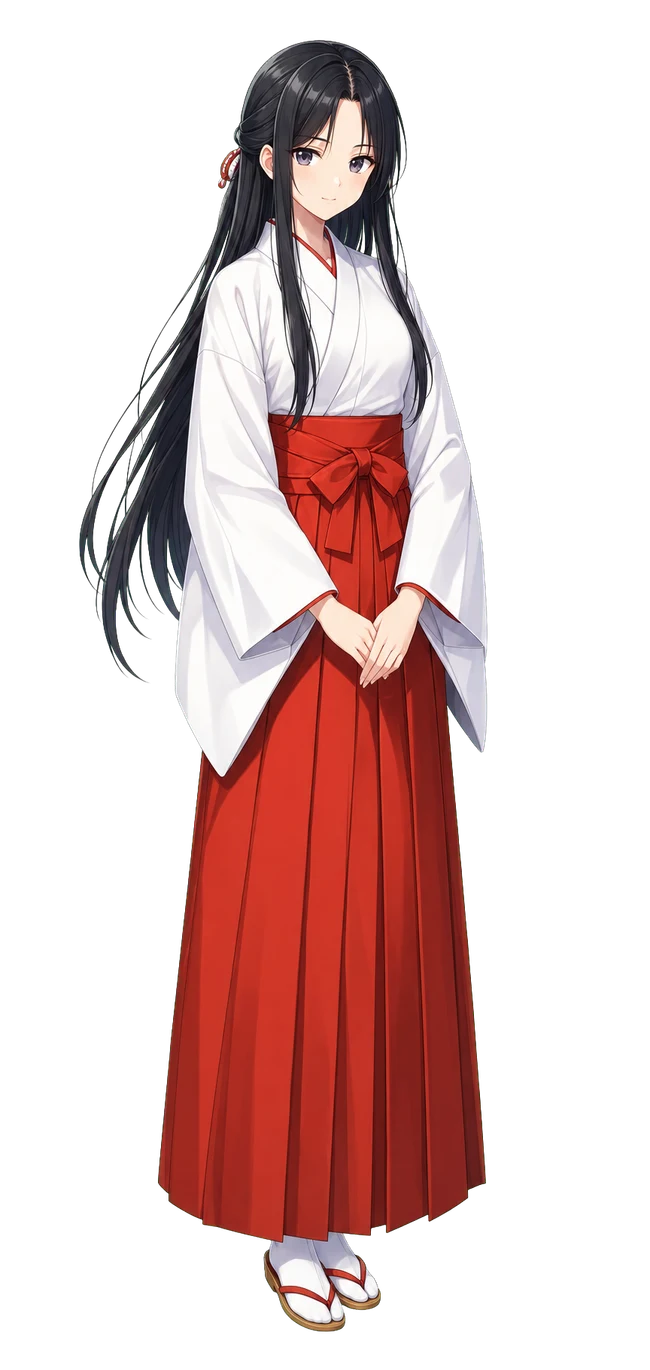
Shrine Maiden Attire
Satsuki Kamishiro
White kosode and red hakama emphasize the orderliness of workwear without extra decorative shorthand.
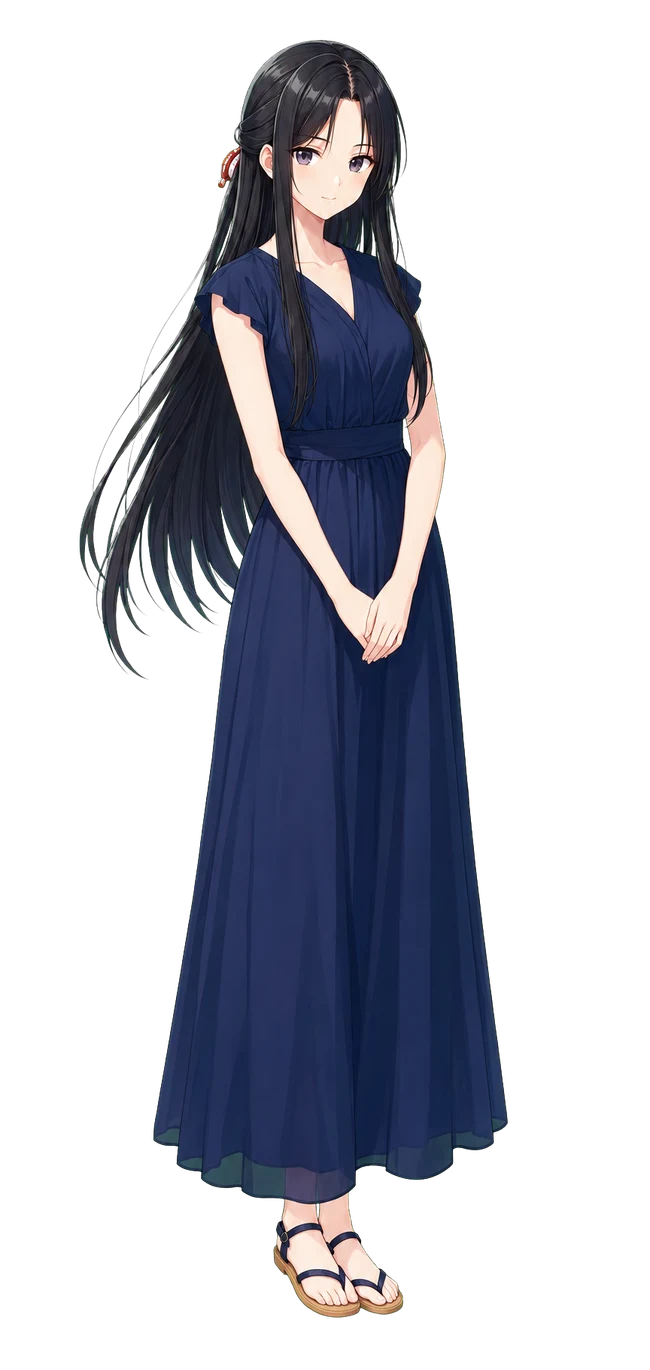
Navy Casual Dress
Satsuki Kamishiro
A long navy dress lightens sleeves and neckline for time away from shrine duties.
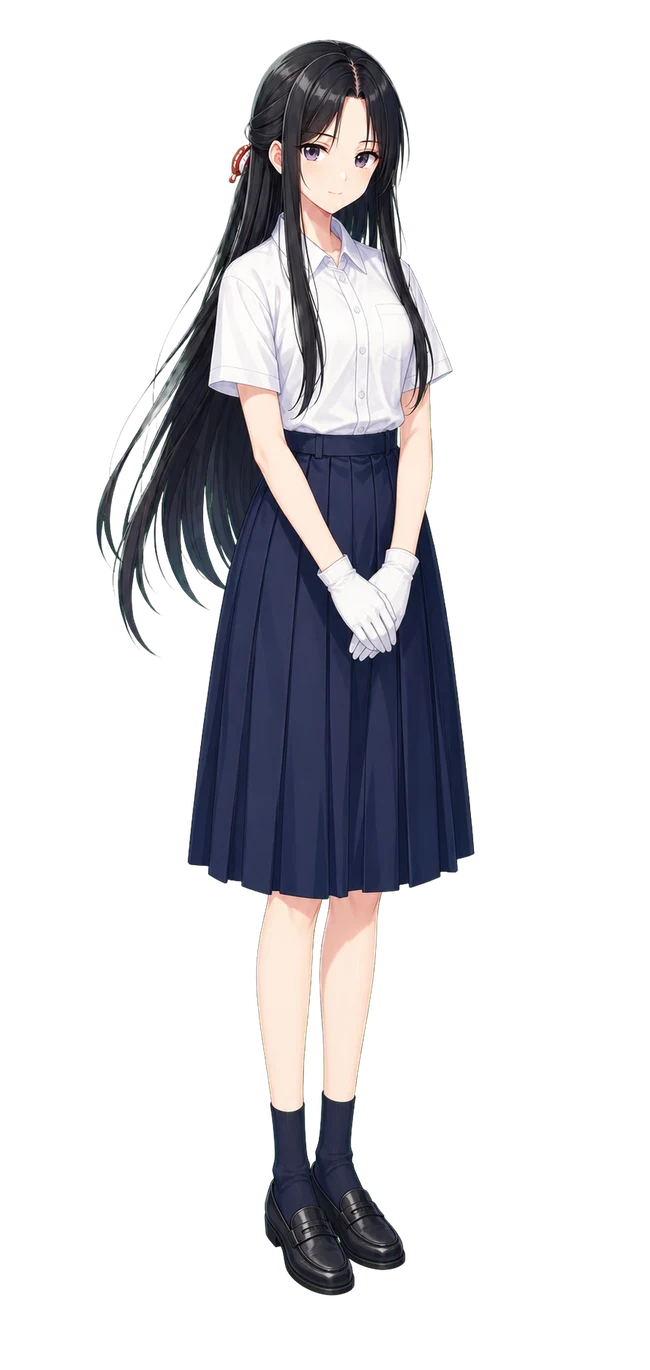
Coastal Cleanup Workwear
Satsuki Kamishiro
A white top, navy skirt and work gloves recognize the everyday labor behind a cared-for coast.
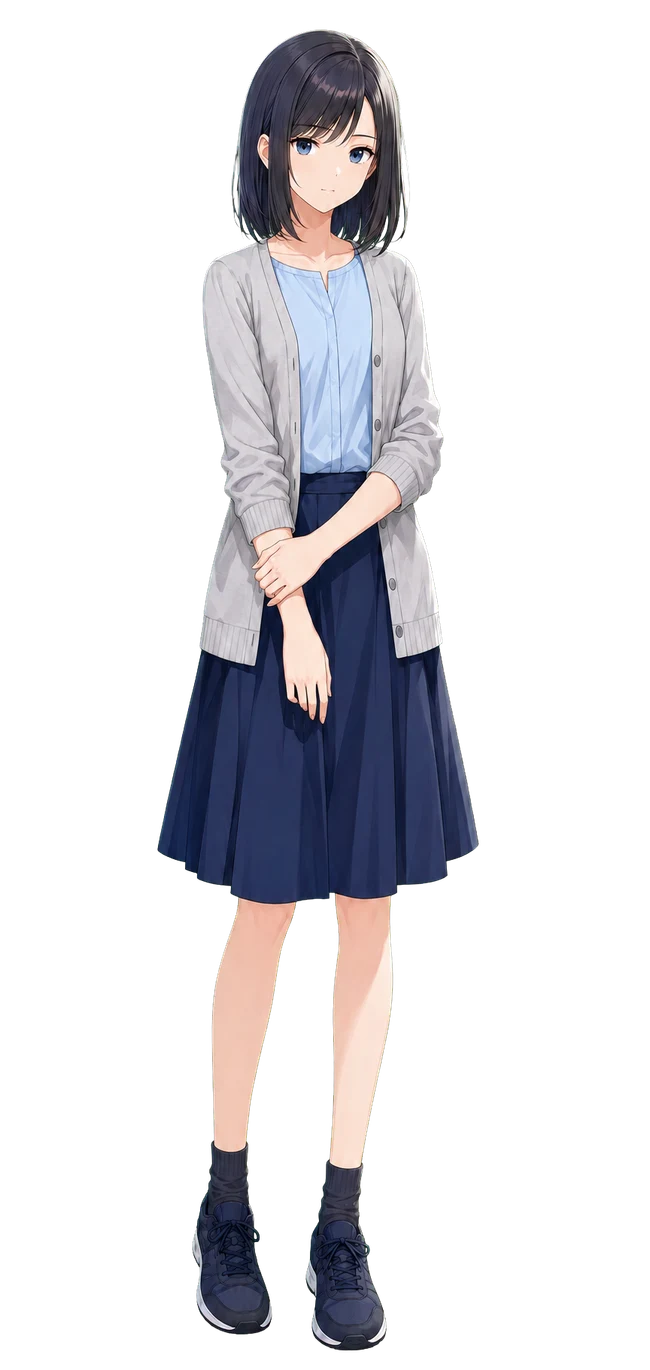
Gray Cardigan Outfit
Nagi Amemiya
A gray cardigan and pale-blue layer connect a quiet palette with small, thoughtful gestures.
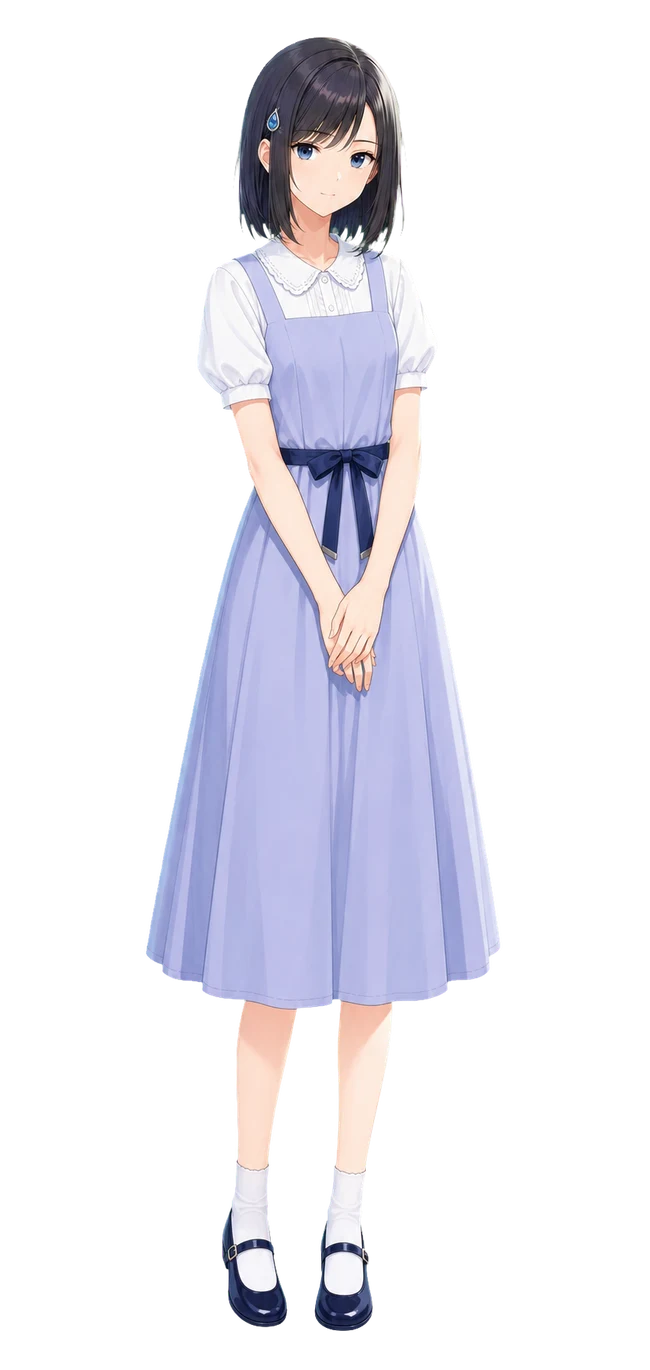
Hydrangea Summer Outfit
Nagi Amemiya
White sleeves, hydrangea tones and a slim navy ribbon make a restrained summer outfit.
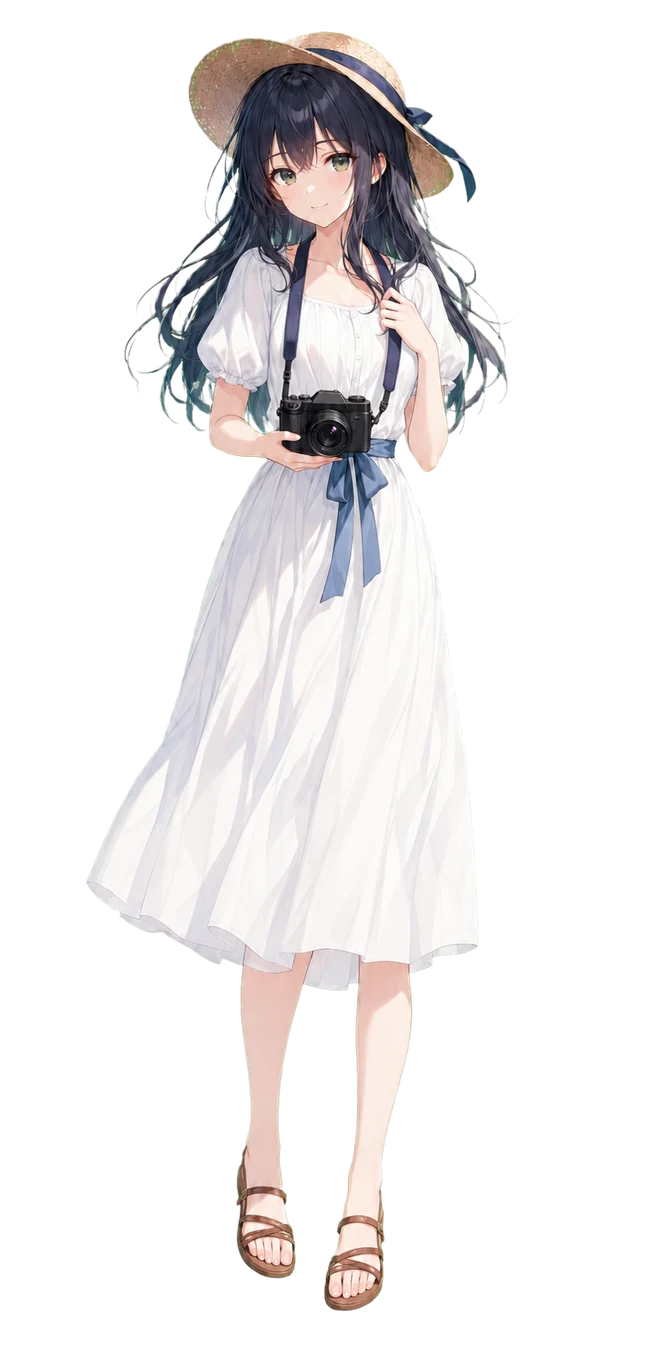
White Dress and Straw Hat
Hotaru Shirase
White summer fabric and navy waist and hat ribbons balance breezy lightness with the weight of a black camera.
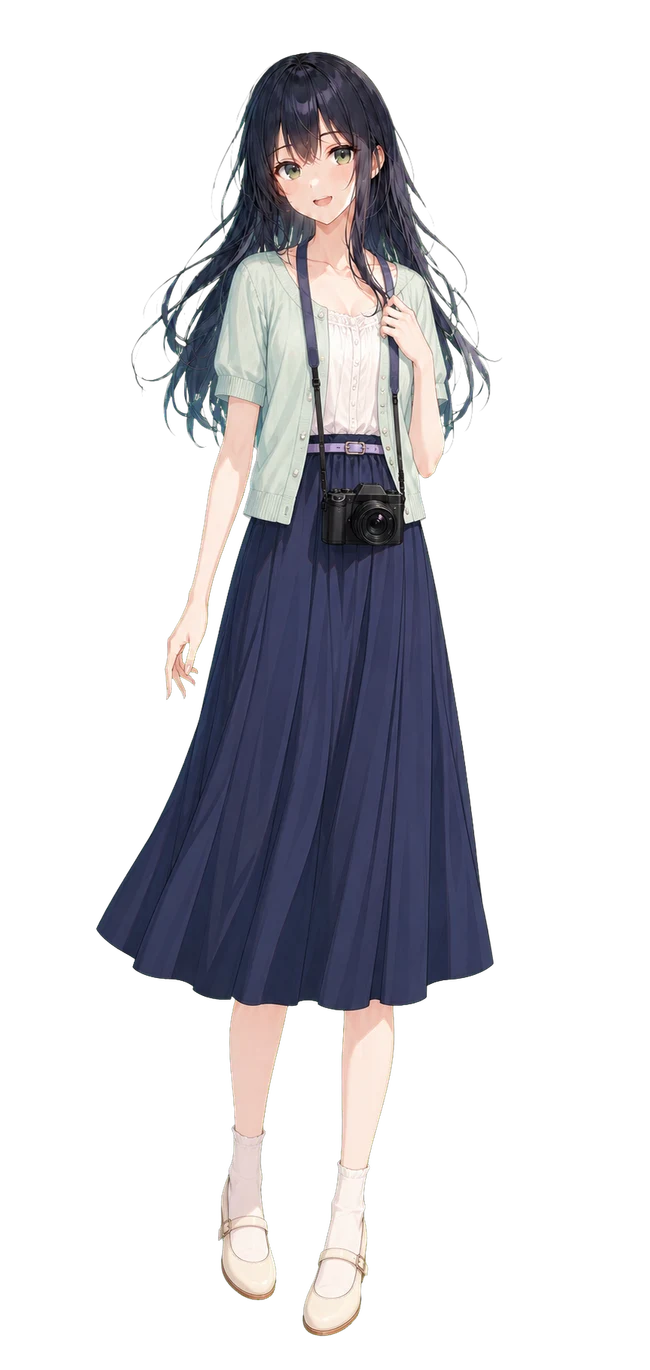
Mint Knit and Navy Pleated Skirt
Hotaru Shirase
Mint knitwear and navy pleats show Hotaru’s everyday city side beyond her white summer dress.
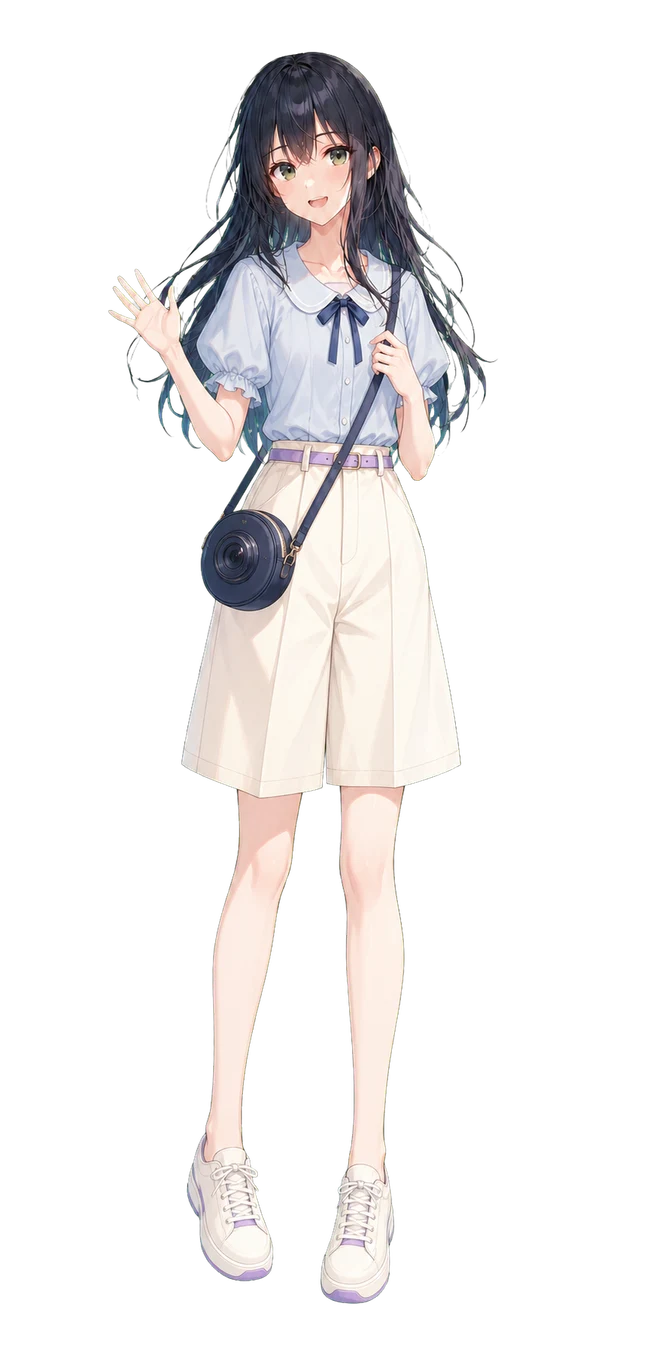
Mist-Blue Blouse and Ivory Culottes
Hotaru Shirase
A pale-blue blouse and ivory culottes combine a light palette with an easy walking silhouette.
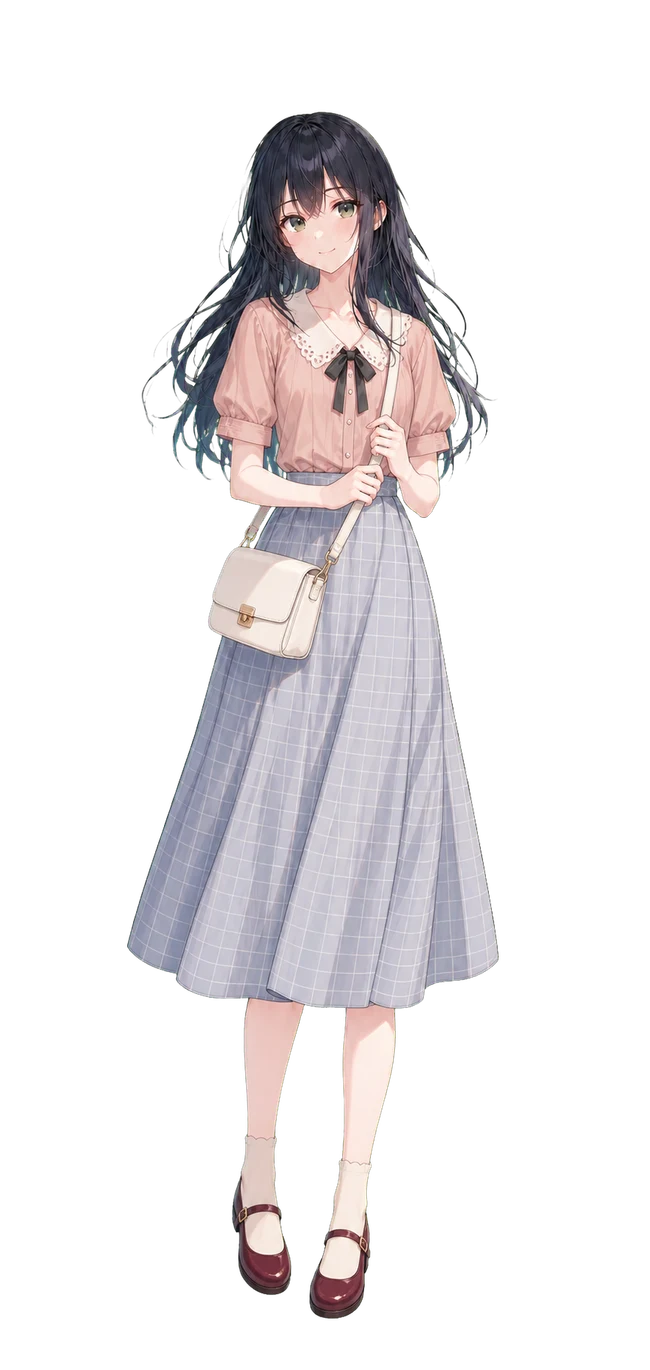
Rose Blouse and Blue-Gray Plaid Skirt
Hotaru Shirase
A rose blouse and gray-blue checked skirt vary the color while remaining grounded summer clothes.
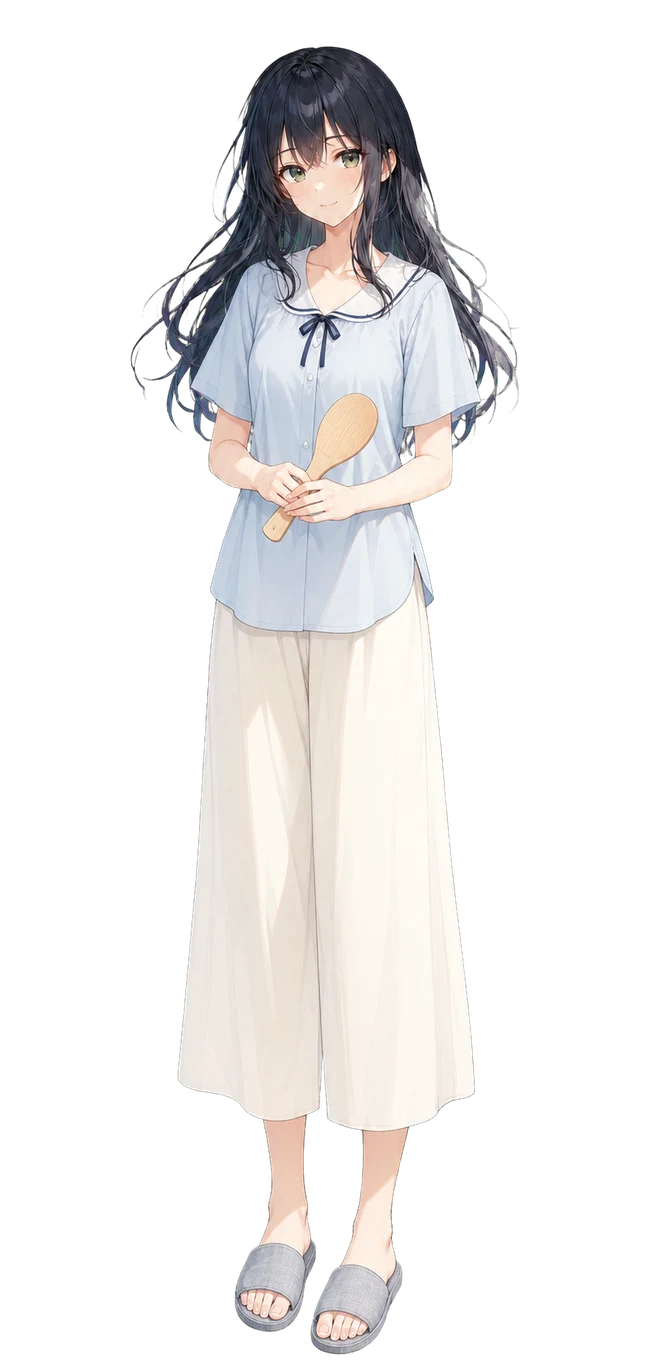
Mist-Blue Loungewear
Hotaru Shirase
A pale-blue top and soft ivory bottom relax the silhouette for time at home.
SUPPORTING CAST
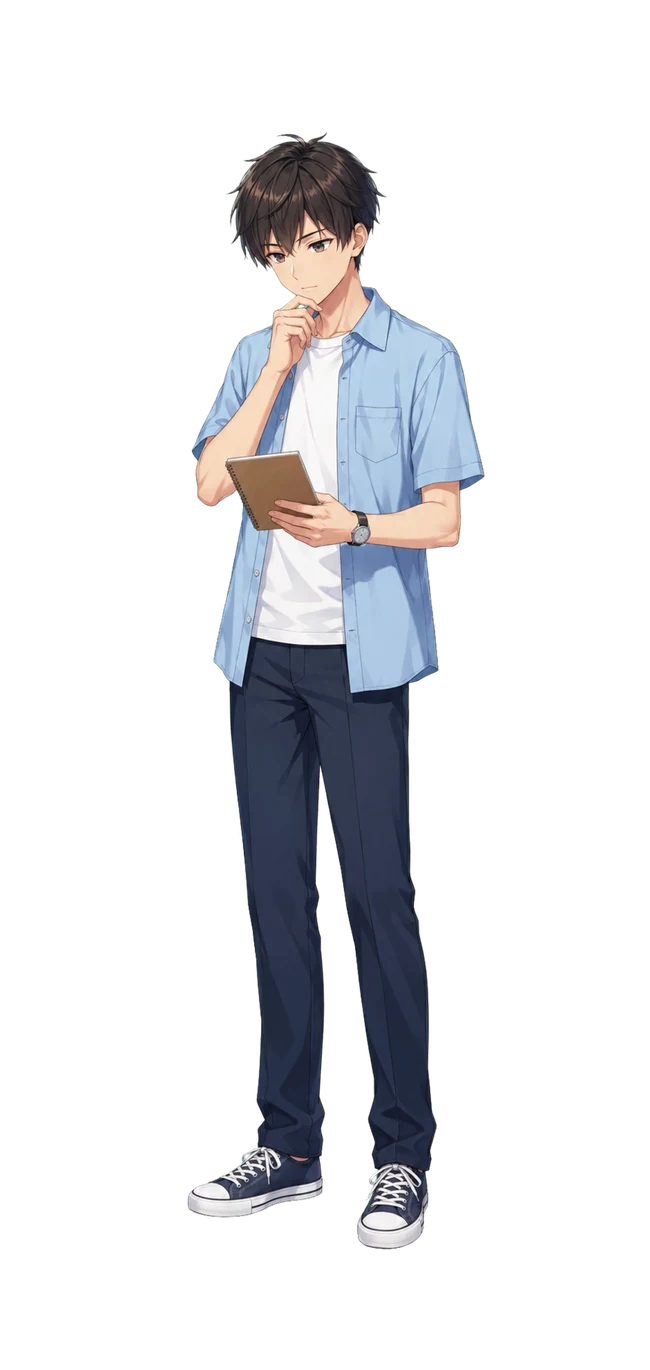
The people who make a town

Haruto Kiryu
The observant 17-year-old protagonist returns from Tokyo. Ordinary, tidy clothes and restrained styling leave room for the player’s point of view.
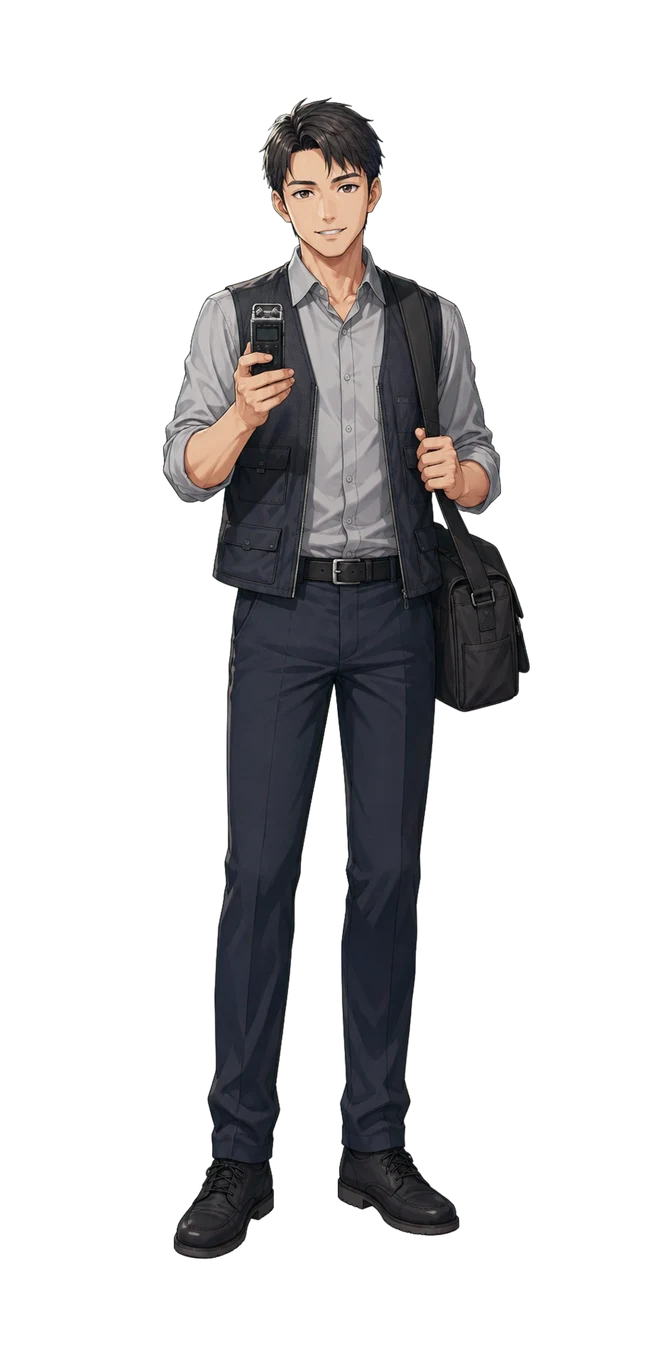
Reporter Kuze
A local-media reporter. Casual clothes, recording equipment and a professional bearing make his occupation legible.
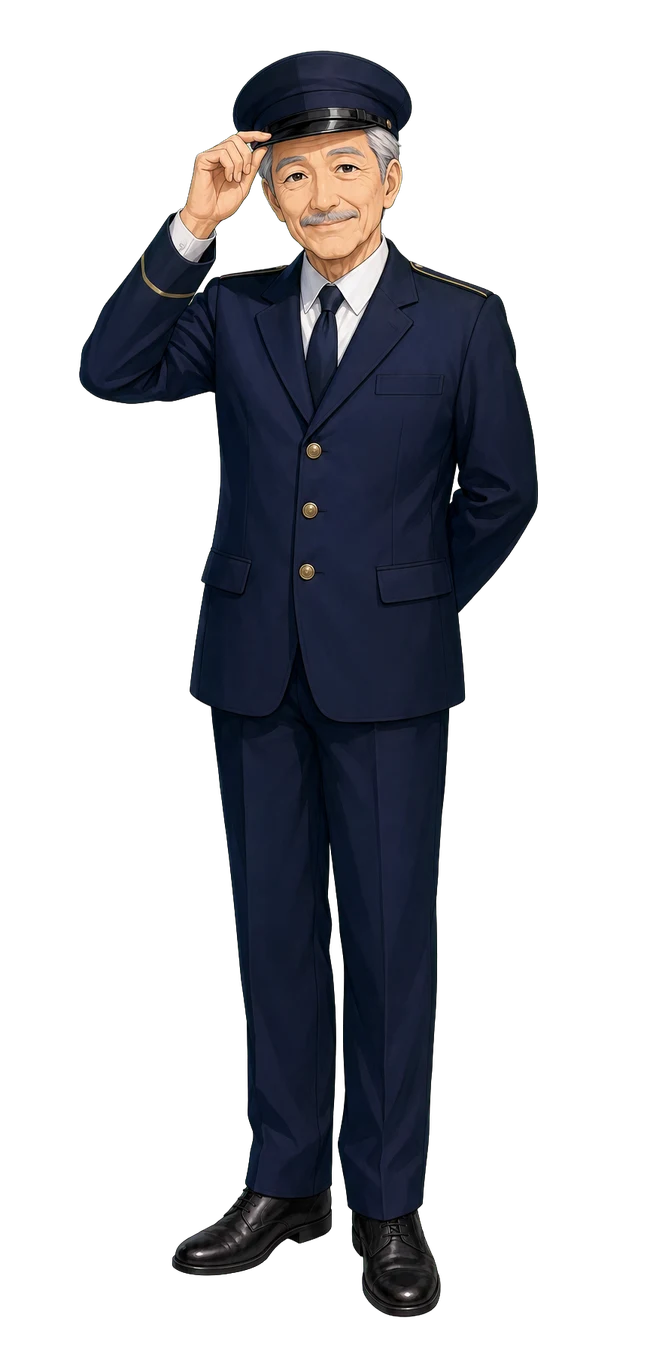
Stationmaster Saeki
A local railway stationmaster. A well-kept uniform and gentle stance speak of the work that sustains a town.
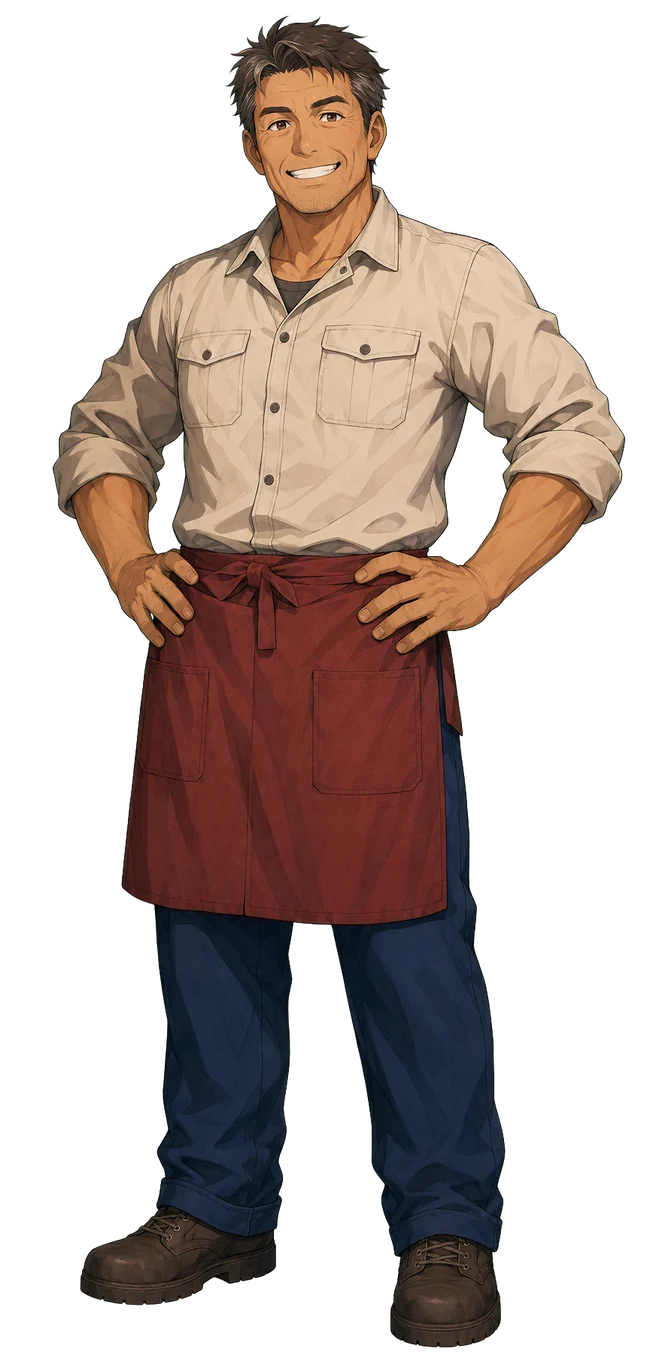
Mr. Asakura
Mio’s father runs Asakura Store. Practical work clothes and an apron place him naturally behind the shop counter.
SHIOMI / COLOR & PLACE
Places where stories happen
These backgrounds are works in progress and include AI-generated images, not final game visuals. Architectural details, lettering, brushwork and color are still being refined.
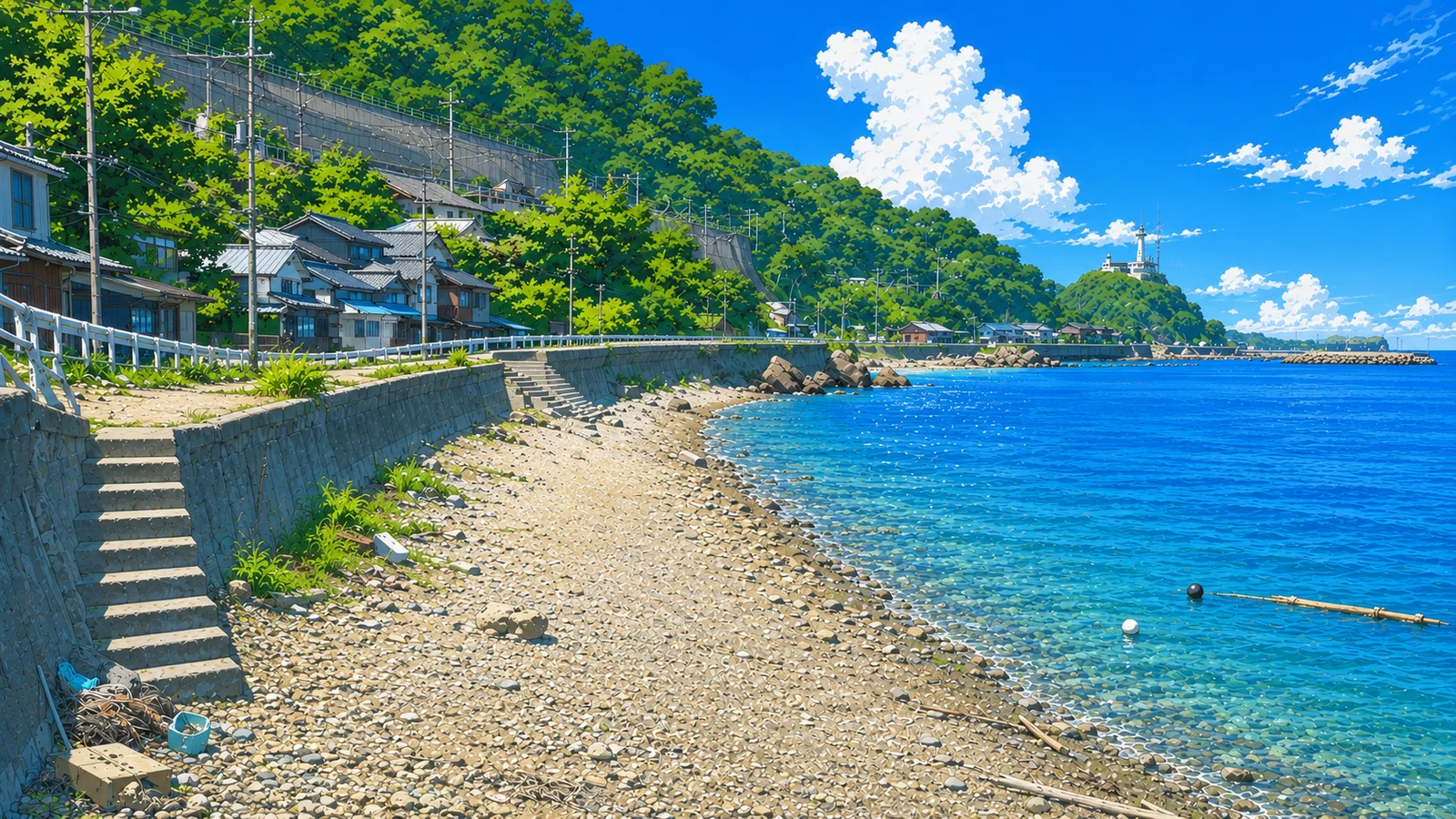
Shiomi coast · Day
An imagined setting
- Our art direction
- Open sky, water and clear light establish the summer’s bright baseline.
- The idea behind this setting
- We want players to enjoy Shiomi before its mysteries take hold. A place they would simply like to spend a summer gives the story everyday roots.

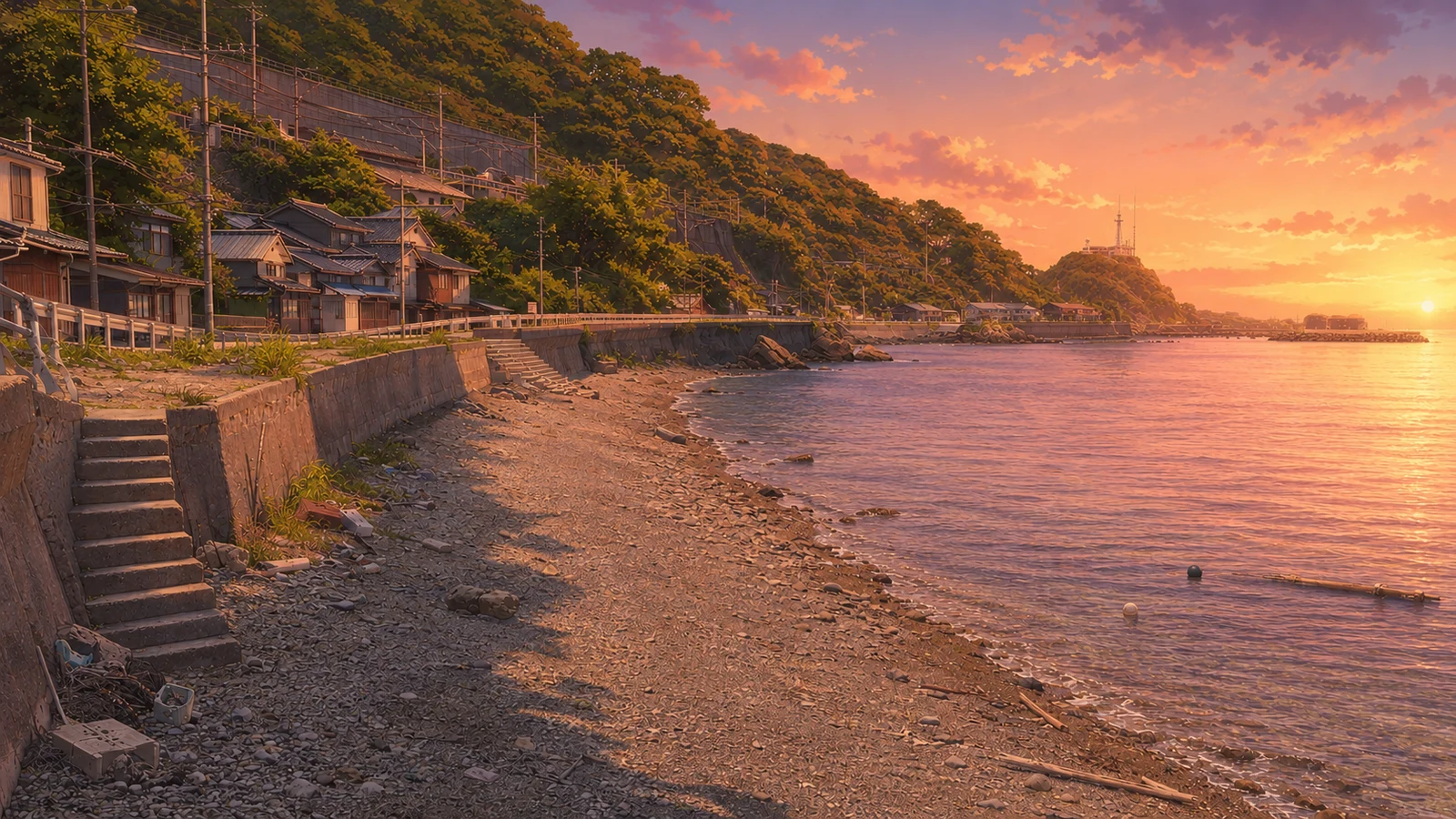
Shiomi coast · Sunset
An imagined setting
- Our art direction
- Warm light turns the same coast into a place for slower conversation.
- The idea behind this setting
- Returning to one place while the pace of conversation changes lets time accumulate on a familiar coast, rather than replacing it with another spectacle.

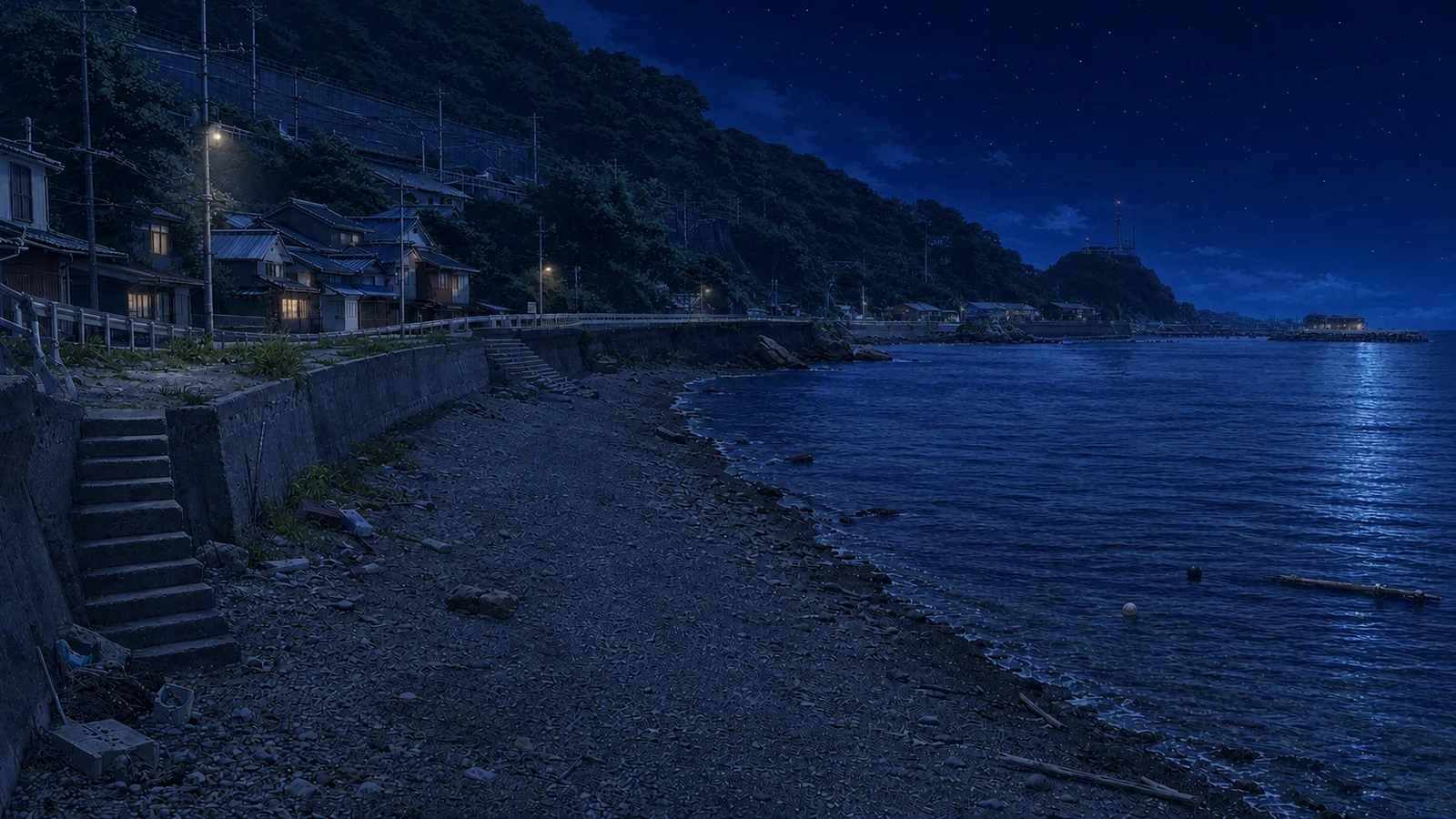
Shiomi coast · Night
An imagined setting
- Our art direction
- Darkness retains the land’s silhouette: unease without breaking spatial continuity.
- The idea behind this setting
- A familiar place can feel unfamiliar at night. Reduced visibility and greater attention to sound create grounded unease without supernatural events.

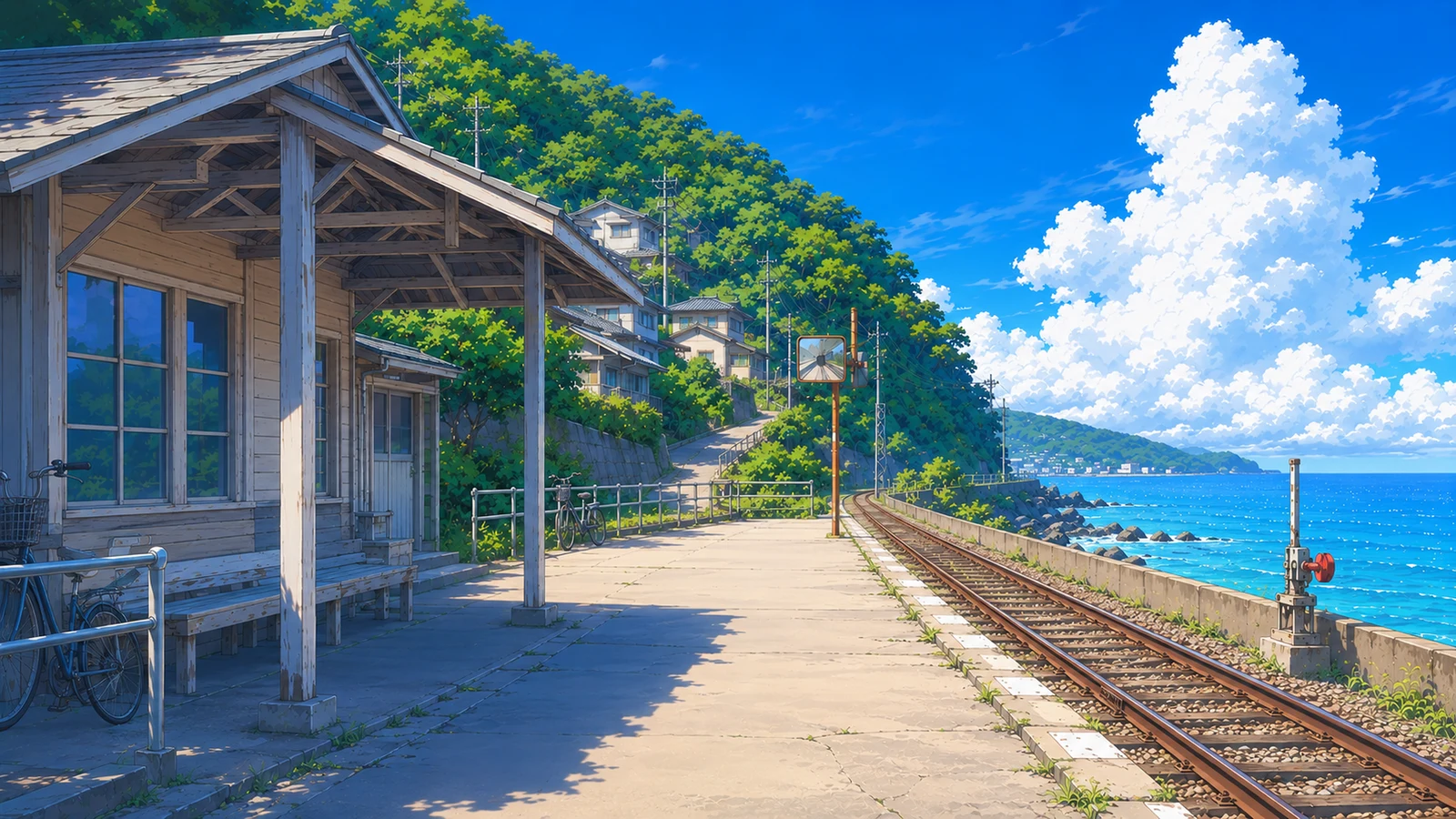
Aofurin Station
An imagined setting
- Our art direction
- Sea, rails and platform space make room for waiting and returning.
- The idea behind this setting
- The station connects the town to the outside world. Waiting itself creates room to speak—or let a thought remain unspoken.

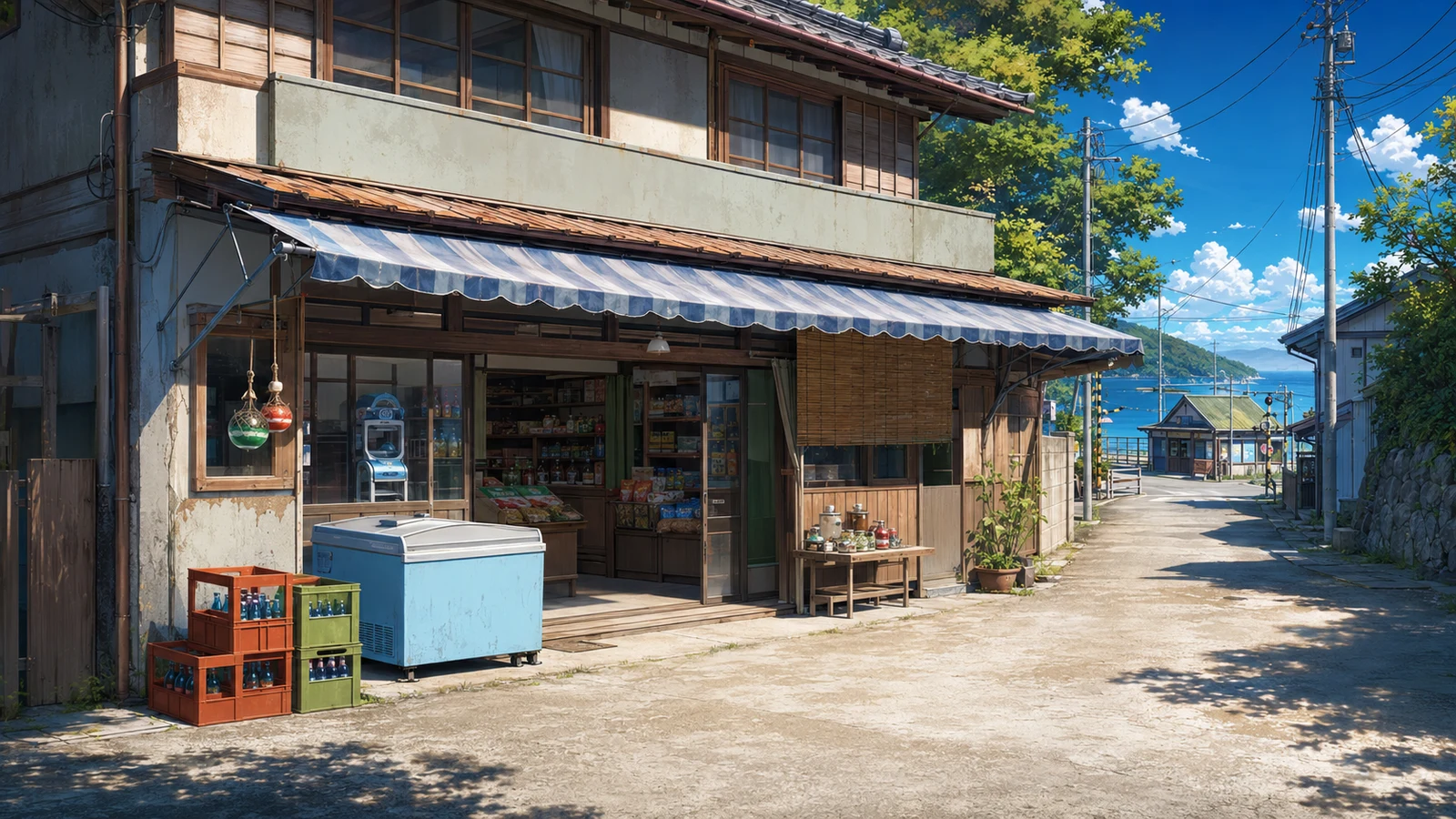
Asakura Store
An imagined setting
- Our art direction
- An awning and everyday shopfront details make this a working store, not a nostalgia display.
- The idea behind this setting
- Meeting Mio within town life lets shopping and practical preparations reveal her character alongside dialogue.

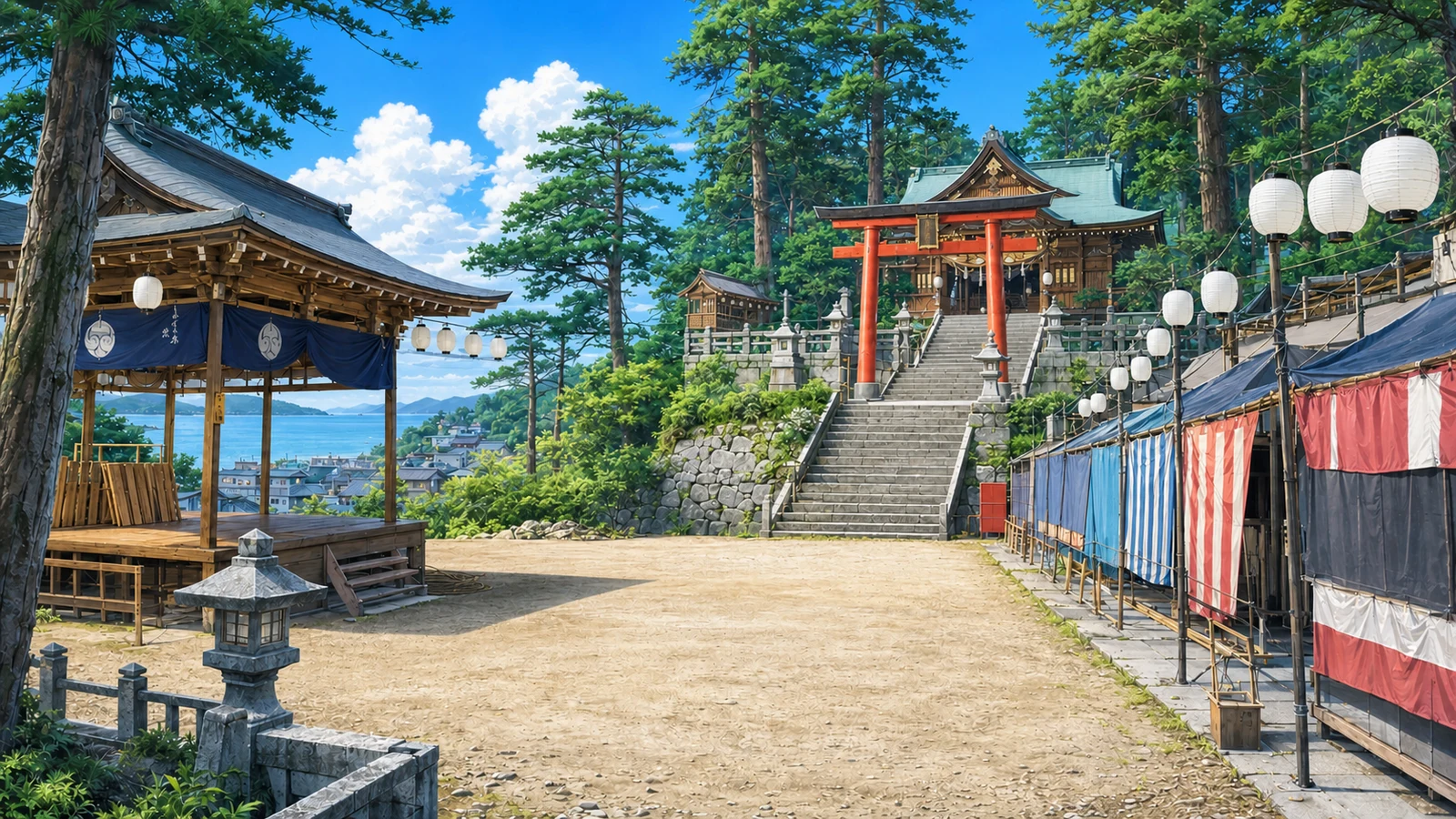
Shiomi Shrine
An imagined setting
- Our art direction
- Depth from path to precinct and pools of shade provide room for festival preparations.
- The idea behind this setting
- The shrine makes Satsuki’s responsibilities everyday work. Festival brightness and the ordinary effort behind it belong to the same place.

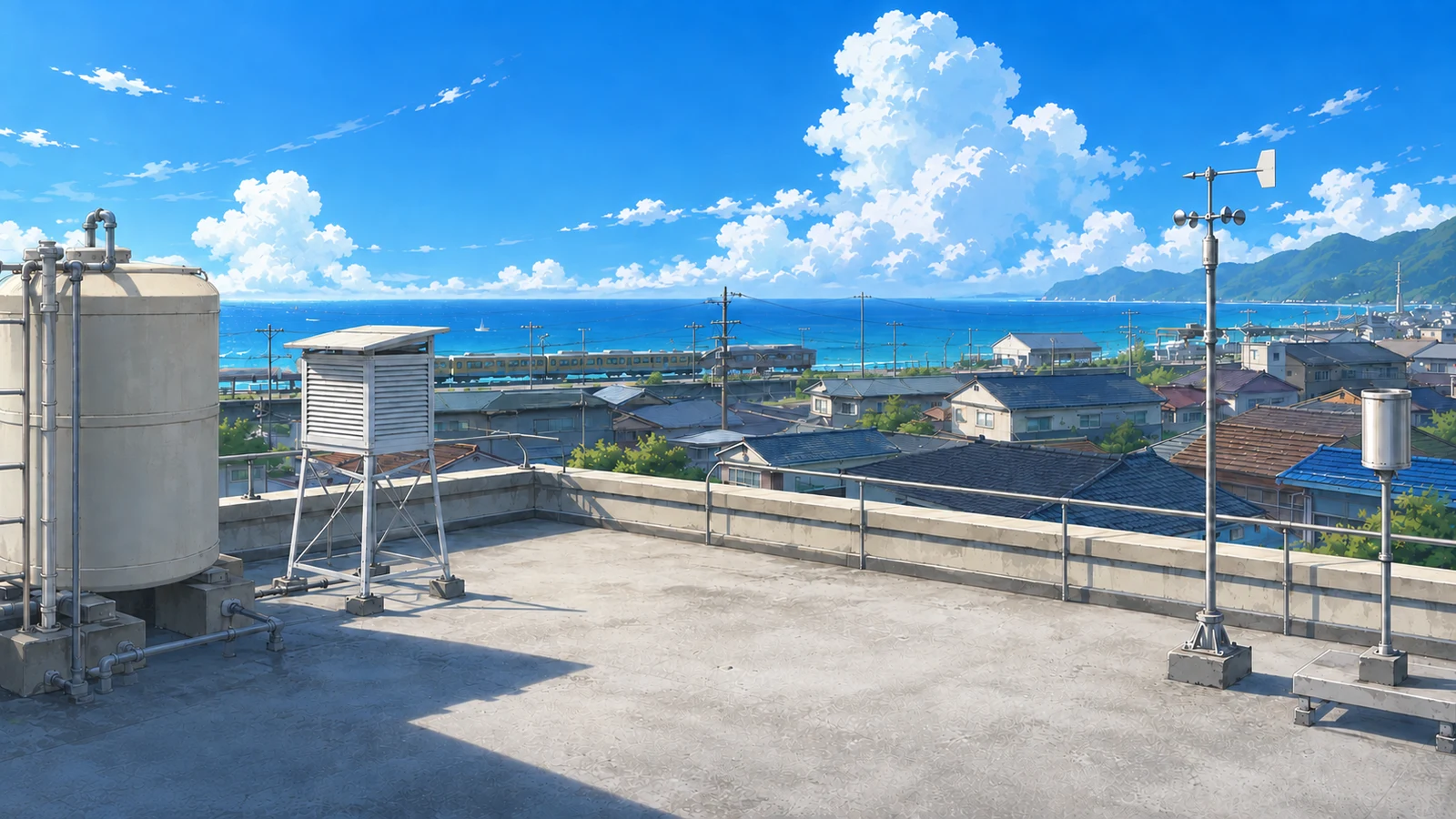
Clinic rooftop
An imagined setting
- Our art direction
- Weather instruments and open sky let Nagi’s interests shape the place.
- The idea behind this setting
- Nagi’s habit of observing the weather naturally leads to time spent looking at the sky together. The instruments belong to her life, not merely to a romantic set.
02 / HOTARU AFTER · ART DEVELOPMENT
Hotaru Shirase AFTER | A future in the frame
Each outfit begins with what the day asks of its wearer: heading to class, handling camera equipment, presenting work at an exhibition or relaxing at home. Fabric, layers and belongings connect study, creative work and professional life, with changing seasons felt through everyday details.
COSTUME DESIGN
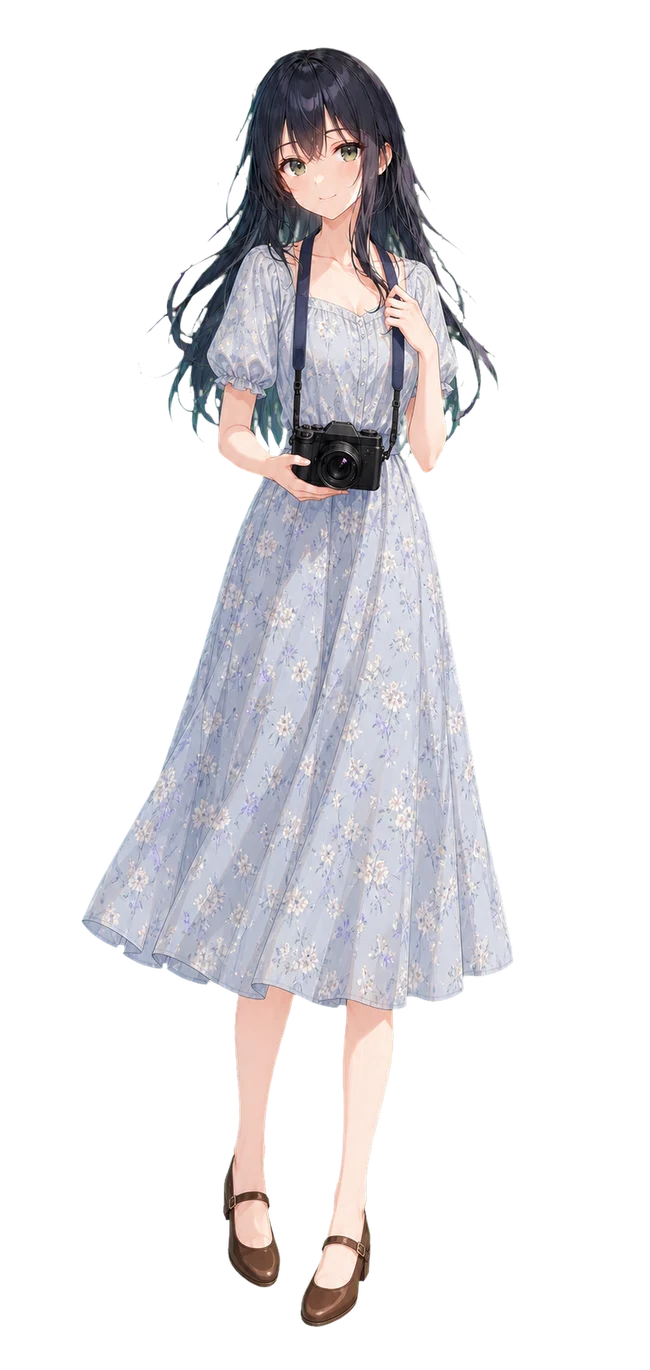
Dressing for seasons and work

University Day Dress
Hotaru Shirase
A lightly patterned dress and camera unite student life with a photographer’s developing eye.
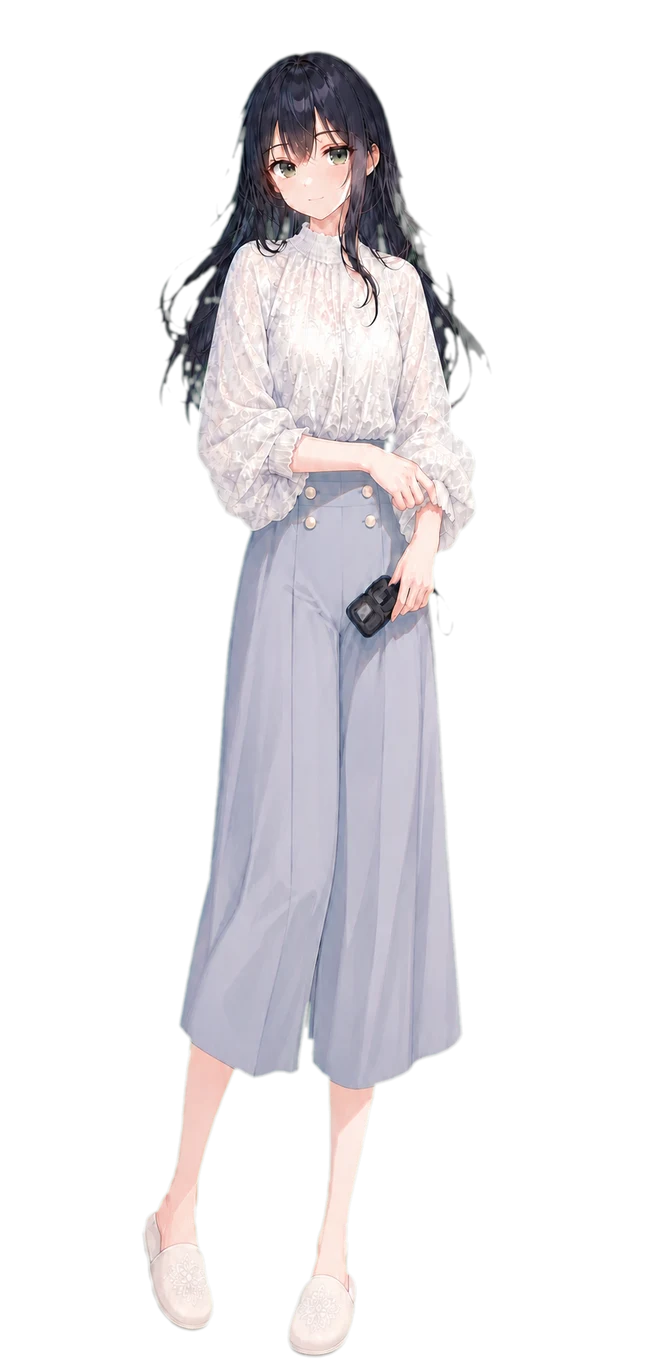
Tokyo Loungewear
Hotaru Shirase
A soft white blouse and pale-lilac bottom bring warmth to the hours between work.
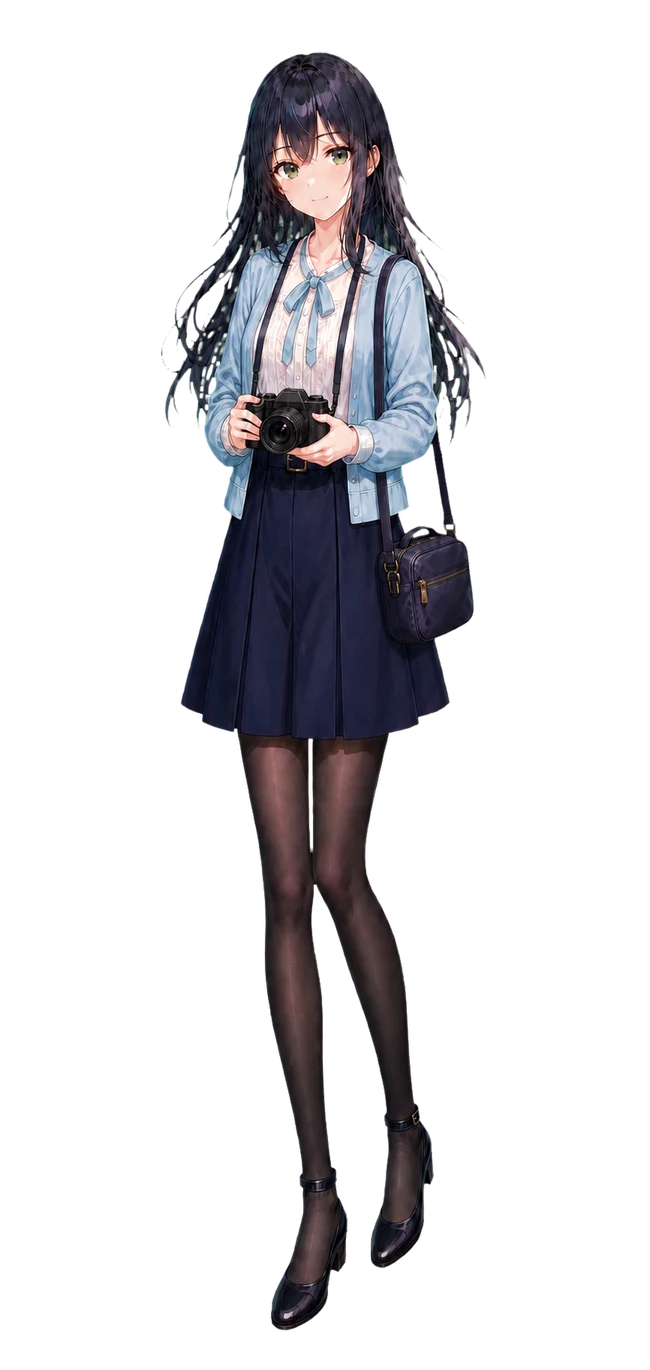
Photography Workwear
Hotaru Shirase
A shirt, navy skirt, camera and bag put the hands that handle equipment at the center.
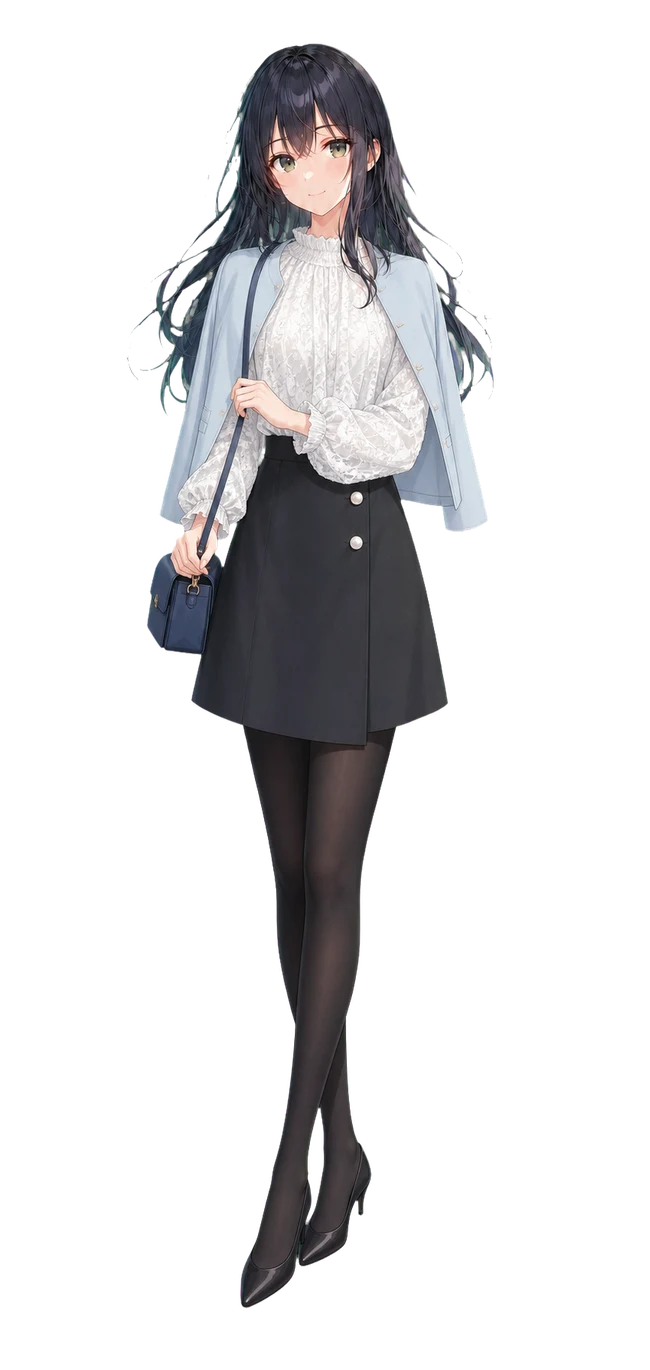
Formal Winter Outfit
Hotaru Shirase
A pale outer layer, dark bottom and slim-strap shoes make a composed winter outing look.
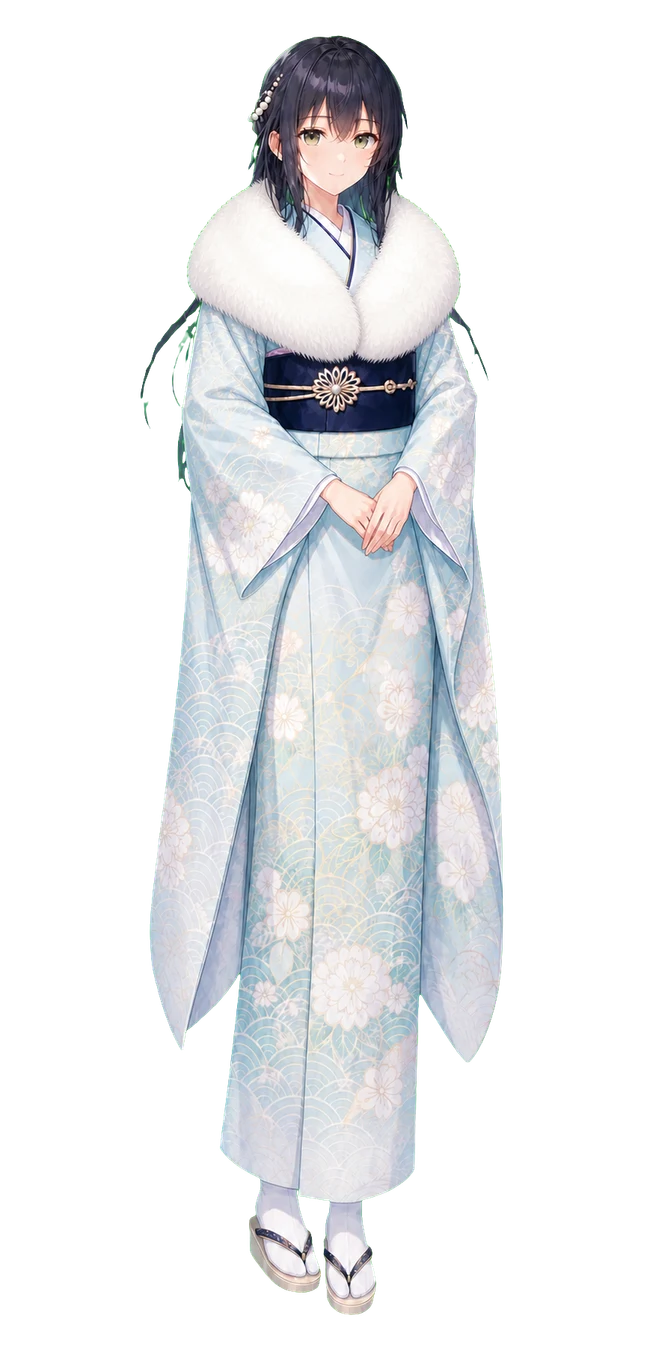
Pale Blue Furisode
Hotaru Shirase
A pale-blue furisode and white stole extend Hotaru’s white-and-blue palette into ceremonial dress.
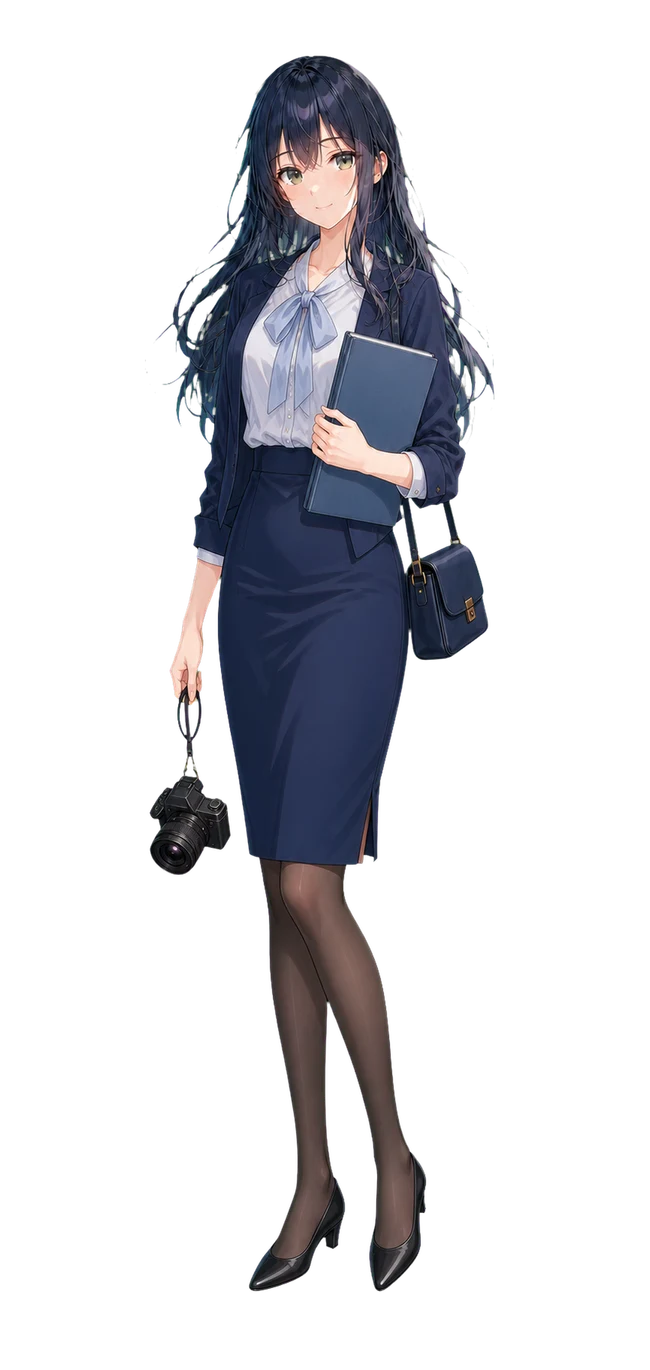
Professional Workwear
Hotaru Shirase
Navy workwear, documents and a camera bring a professional bearing to her familiar appearance, expressing a new stage of everyday life.
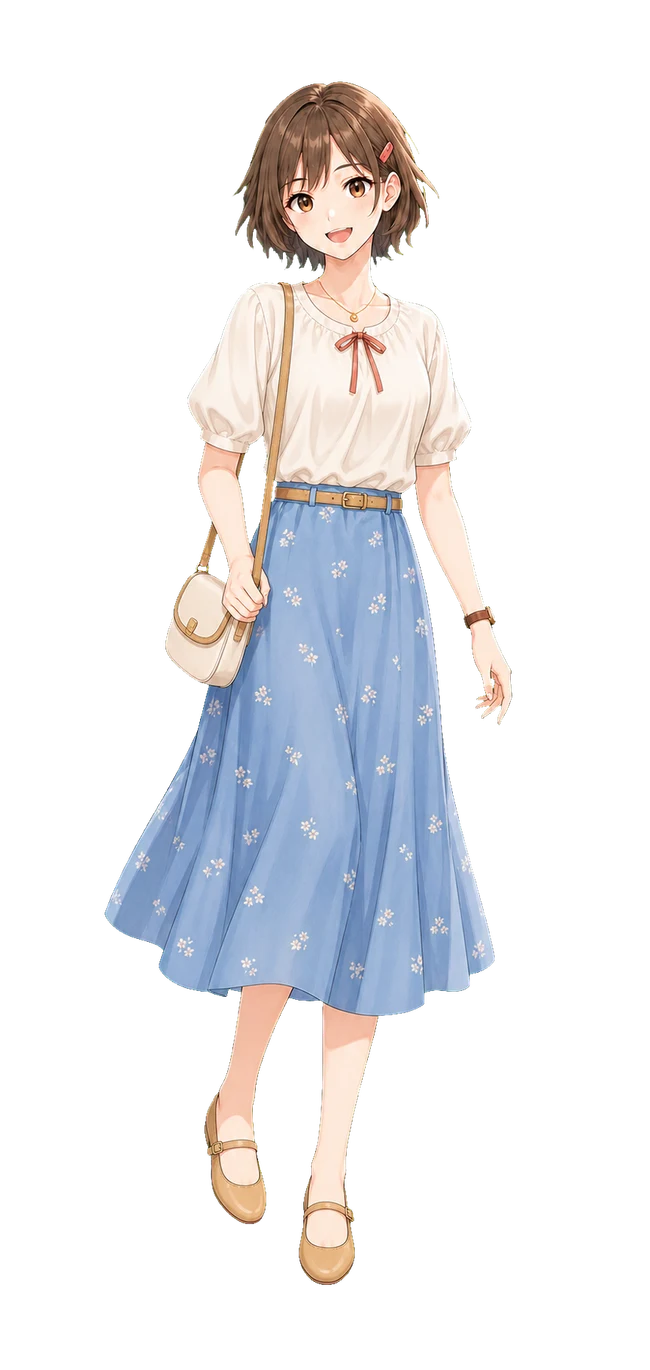
Misaki · Summer florals
Misaki Makino
An ivory blouse and blue floral skirt pair light fabric with a small bag for summer outings.
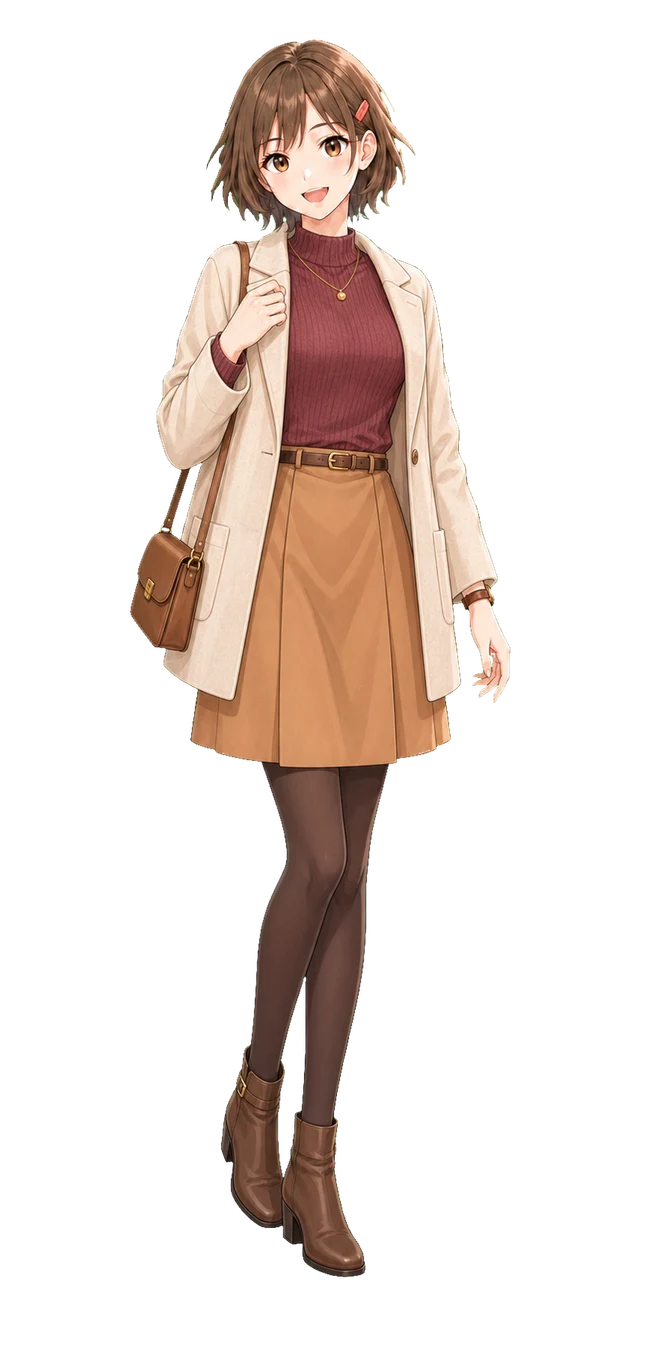
Misaki · Autumn knitwear
Misaki Makino
Berry knitwear and an oatmeal coat add warmth without losing ease of movement.
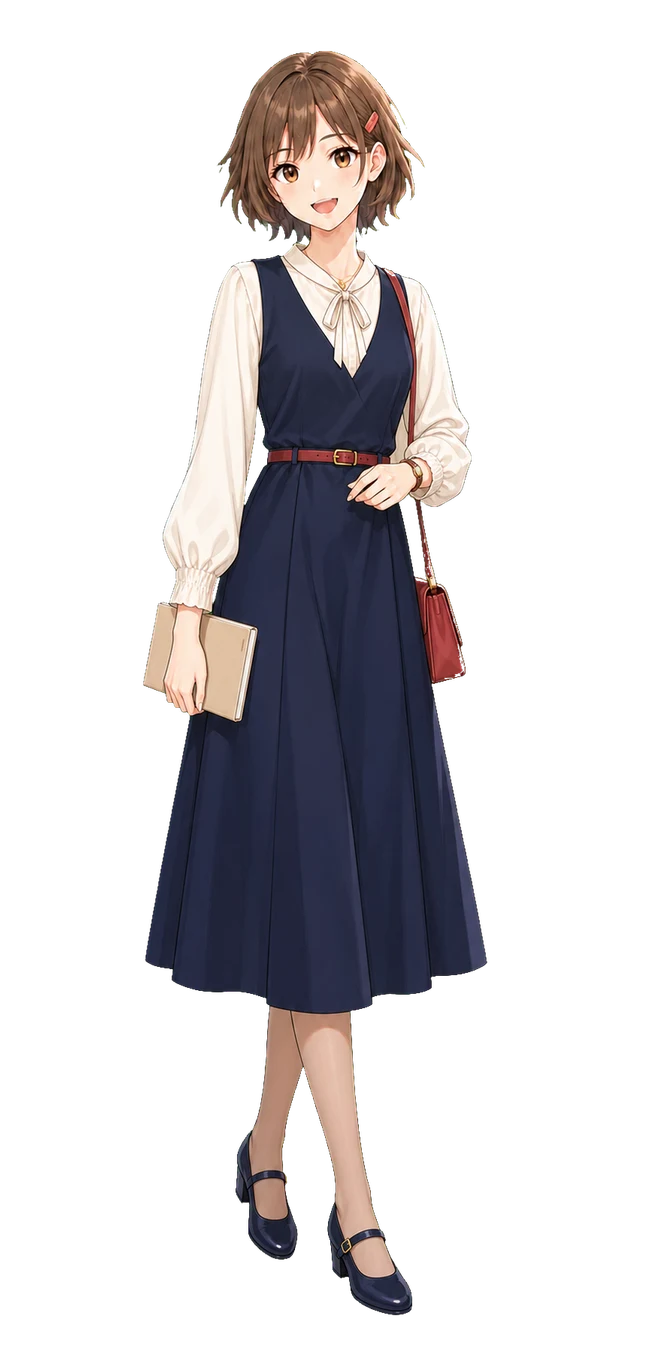
Misaki · Exhibition outfit
Misaki Makino
Ivory and navy exhibition wear lets Misaki attend to the work and its visitors.
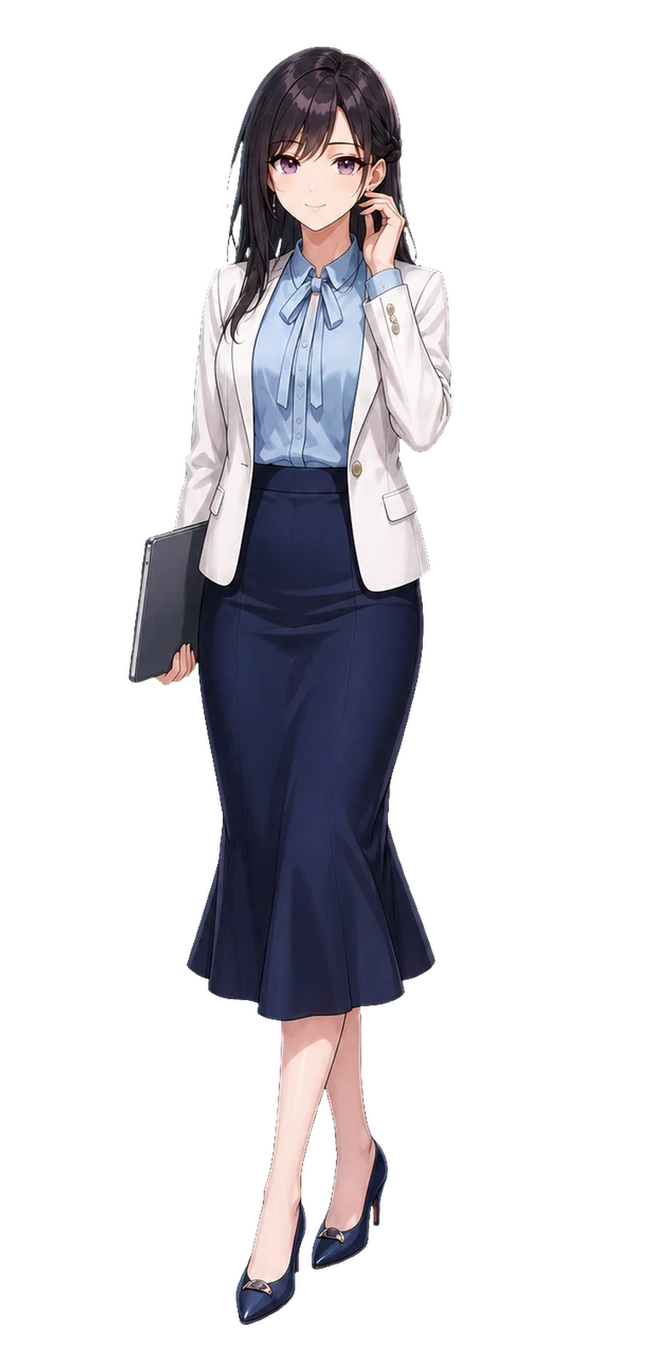
Shion · Presentation jacket
Shion Tsukishiro
A white jacket and powder-blue blouse combine presentation-ready structure with a student’s softness.
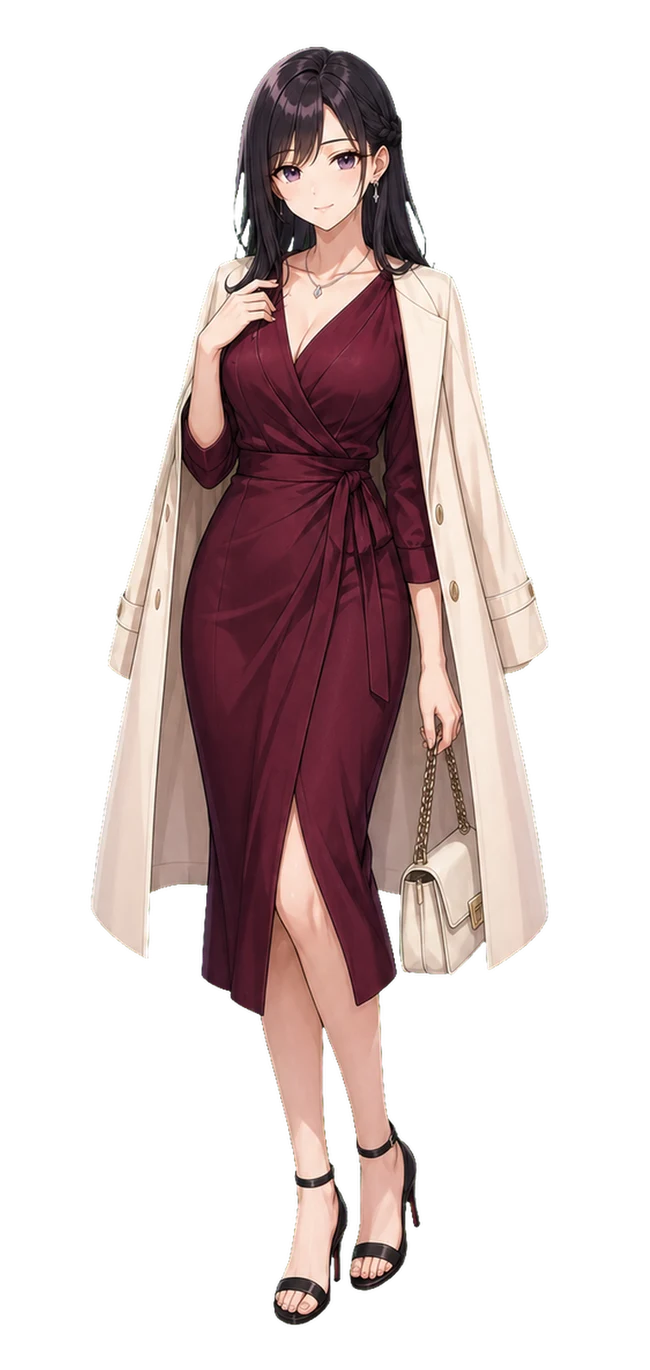
Shion · Wine-colored dress
Shion Tsukishiro
A wine-colored wrap dress and cream coat shift the mood toward an evening out through color and fabric.
ACTING / EXPRESSION
Expression belongs to the whole body
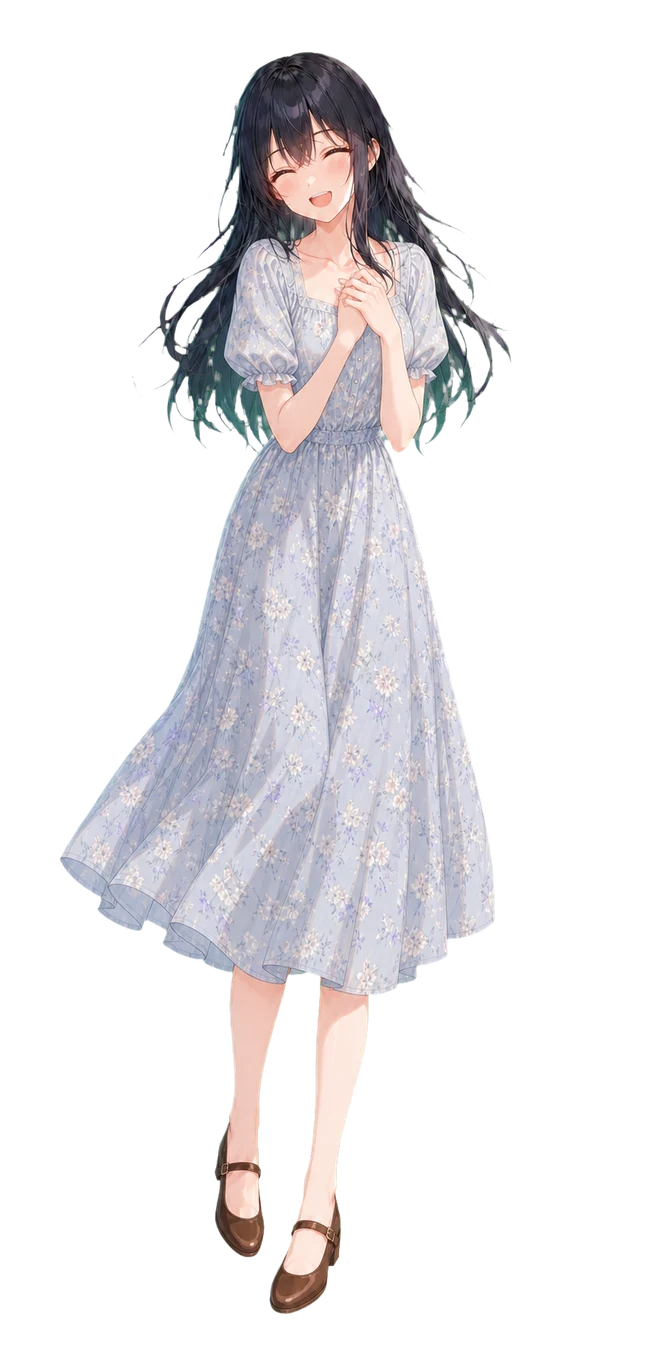
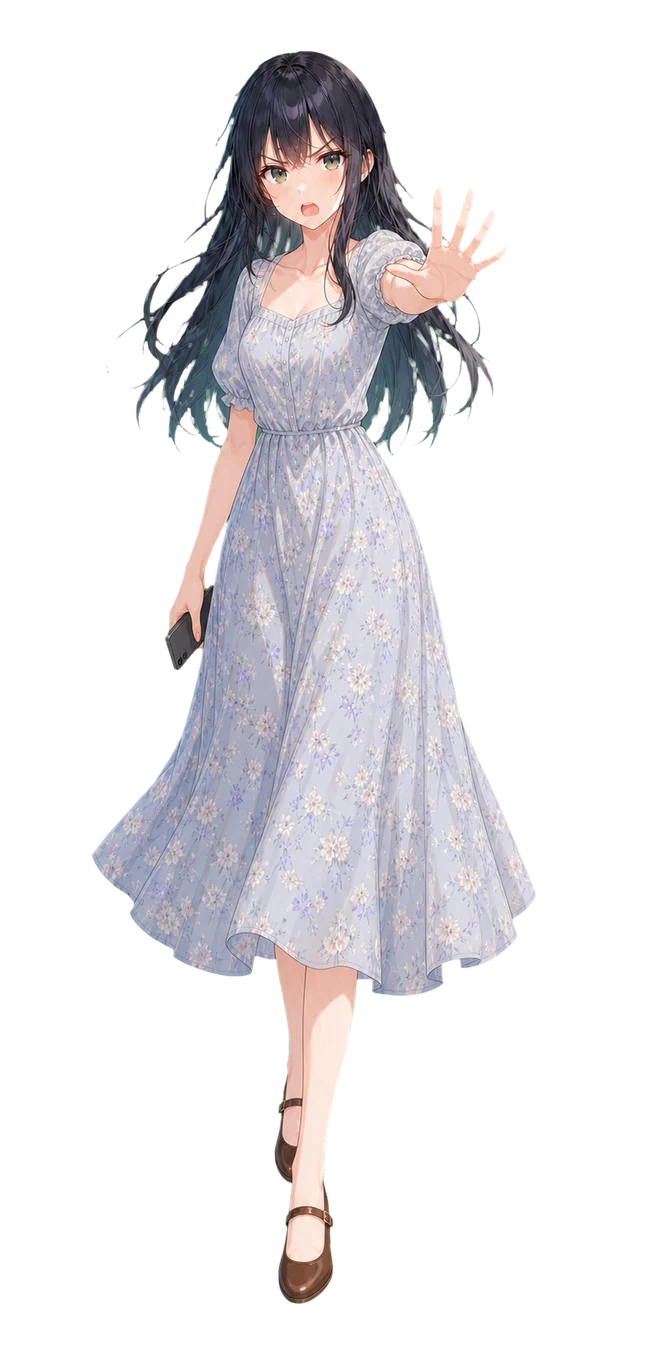
The same university outfit carries different emotions through brows, gaze, mouth, shoulders and hands. We treat face and gesture as one performance, giving shape to conversational rhythm and feelings left unspoken.
TOKYO / PEOPLE
A wider circle in Tokyo
Misaki’s spark, Shion’s poise.
A short bob and coral accents bring Misaki’s quick, lively energy into the frame. Pale knitwear, a tailored jacket and a wine-colored dress reveal Shion’s gentle sophistication. We give these two distinct temperaments a particularly striking visual presence, making encounters in Tokyo memorable through the people who catch your eye.
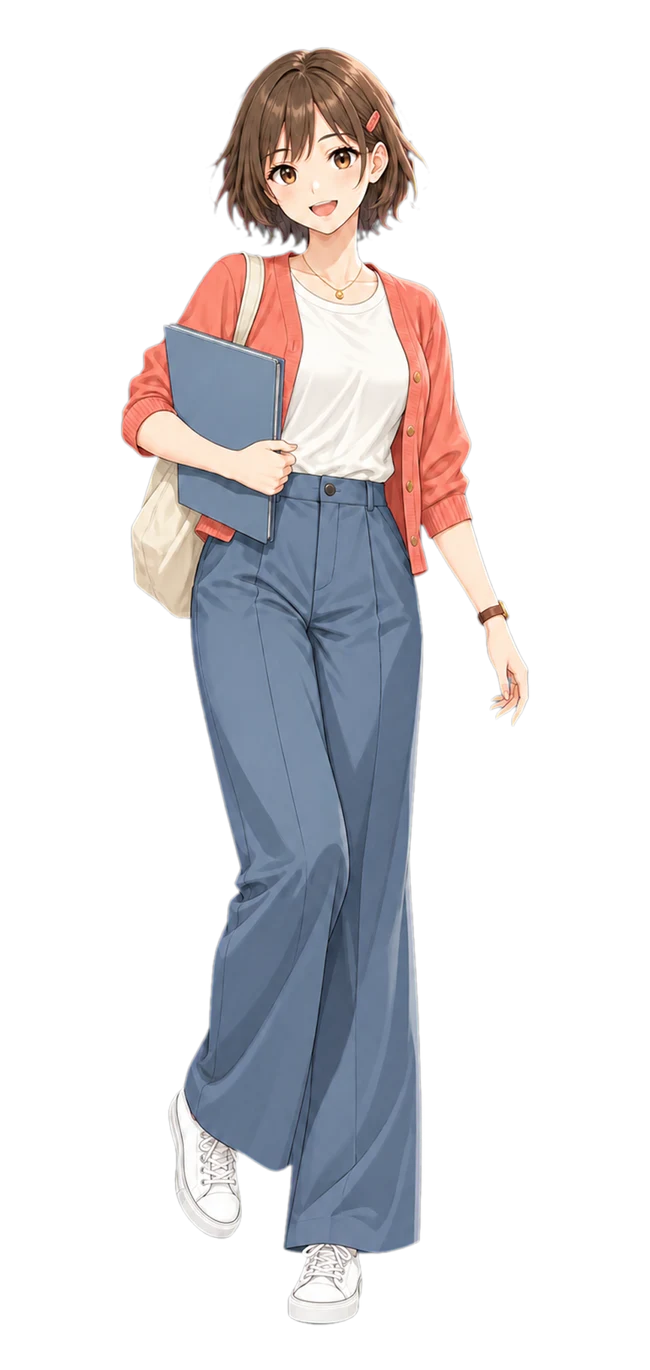
Misaki Makino
Hotaru’s friend and visual-design classmate. A short bob, coral accents and a portfolio convey her quick, practical energy.
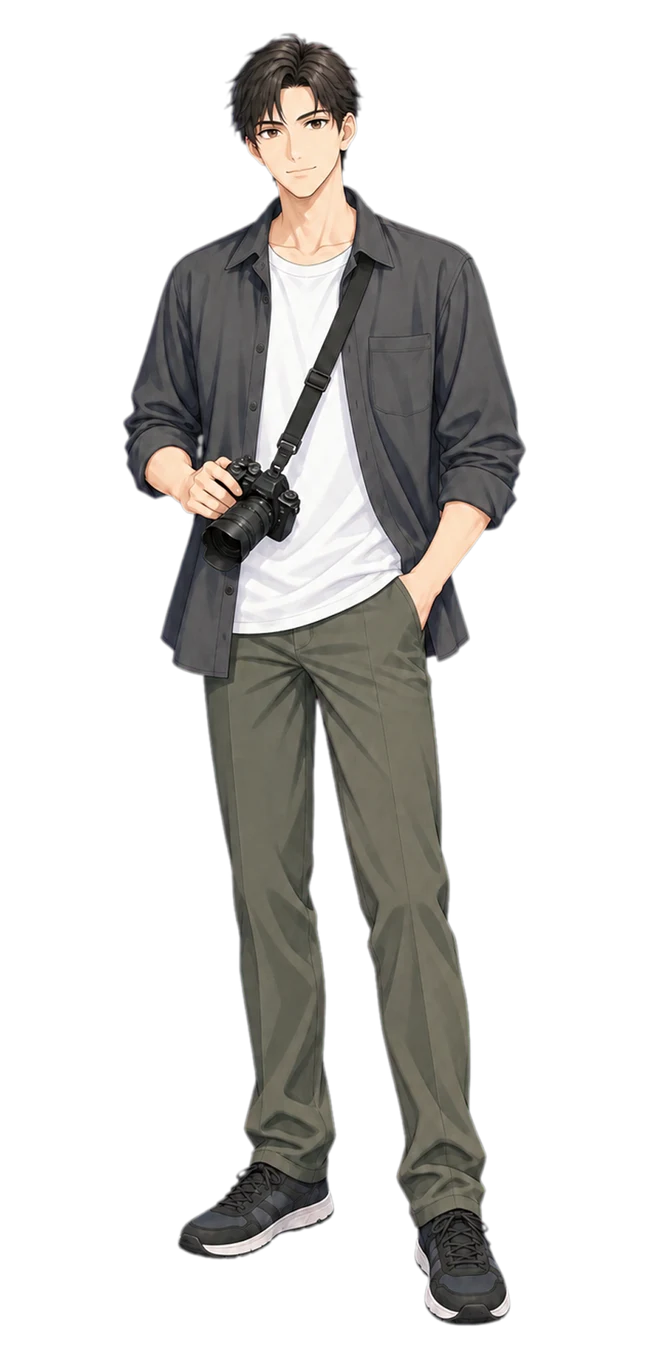
Naoto Kuga
A senior photography student. An older camera, charcoal outerwear and an easy stance suggest familiarity with the work.
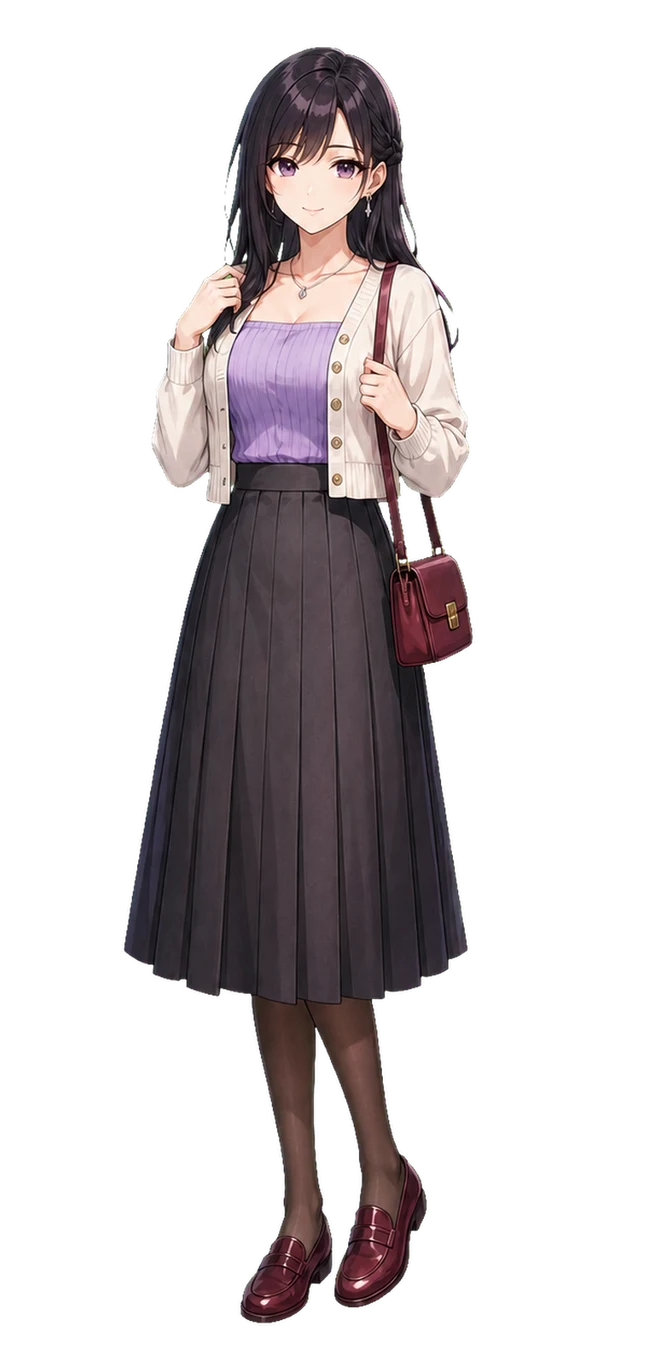
Shion Tsukishiro
Haruto’s senior studies human-centered design. Campus days, presentations and evening outings each balance softness with sophistication.
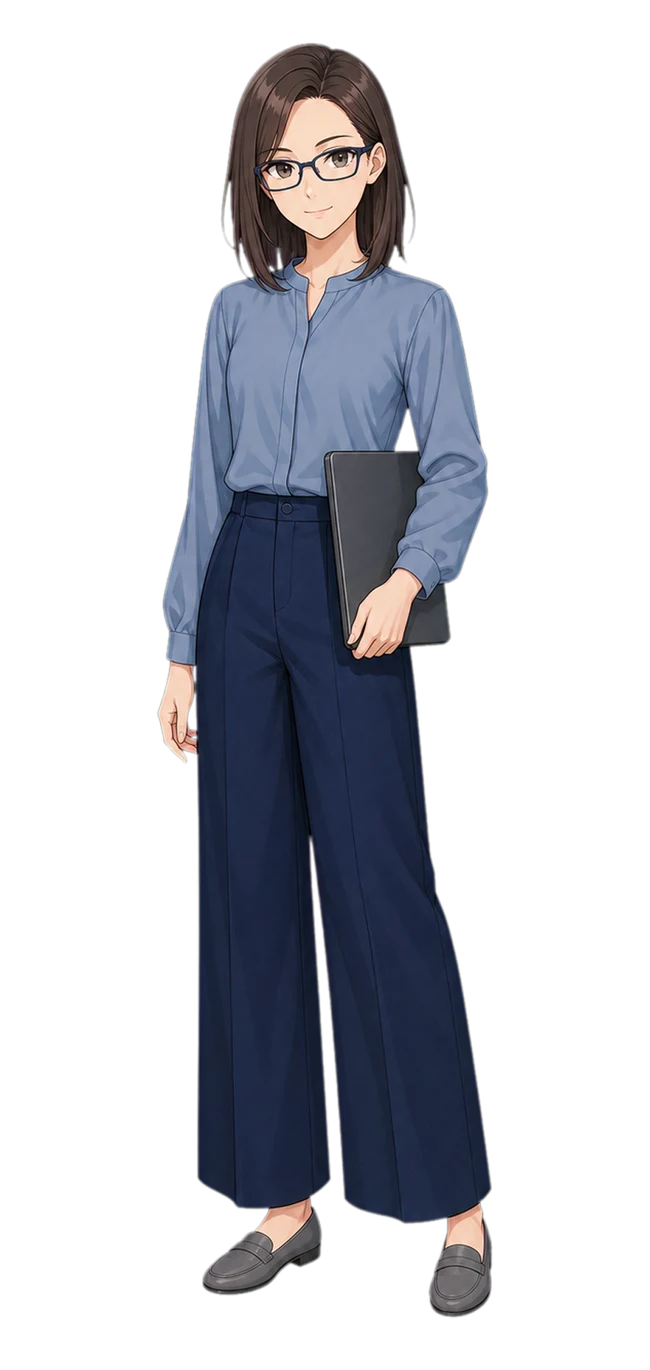
Rio Takase
A seminar peer with strengths in UI, data and accessibility. Gray-blue clothes, fine-framed glasses and a slim laptop case keep her design clear and practical.
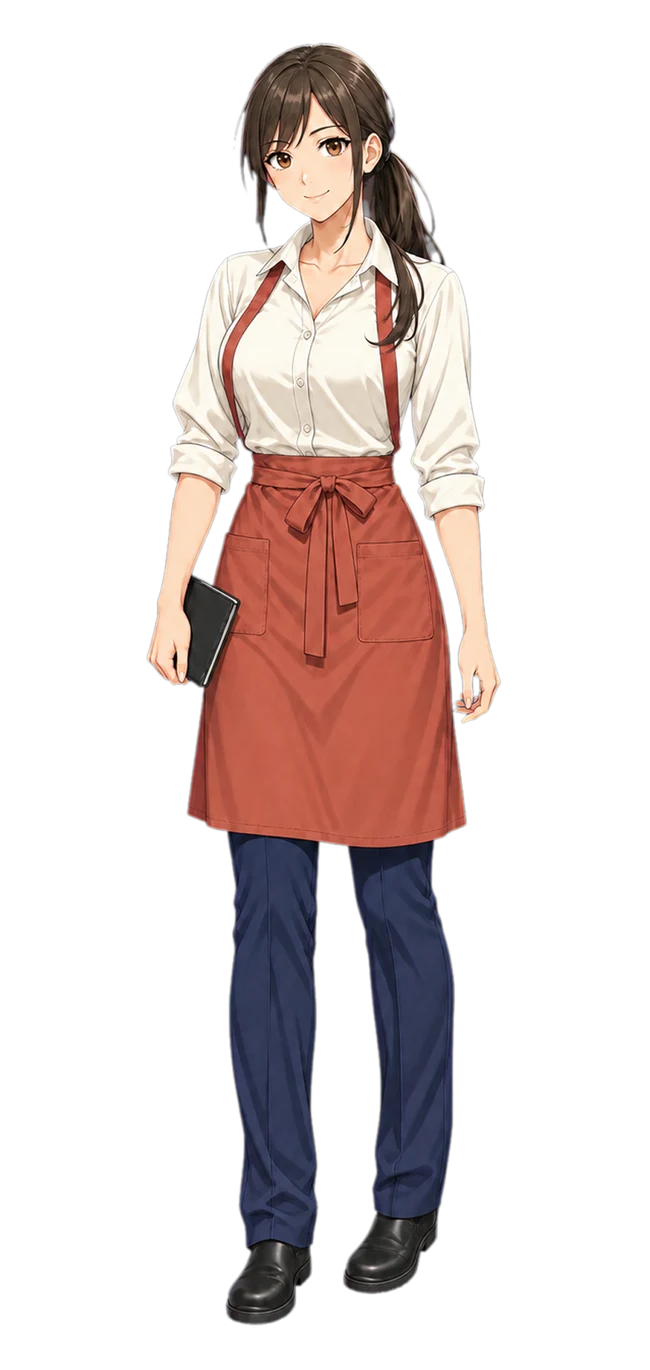
Chiharu Komiya
She helps carry the family’s Komiya Diner forward. A terracotta apron, rolled sleeves and an order book give her the texture of everyday work.
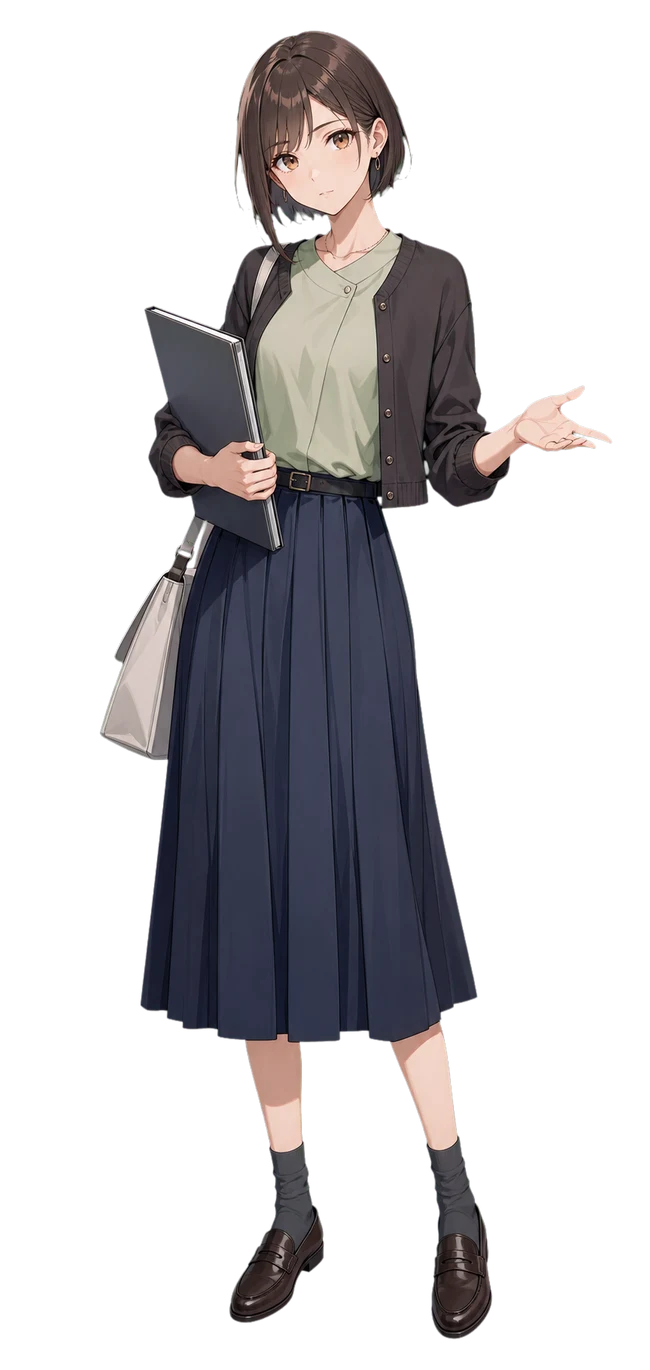
Aya Kurahashi
A photography classmate involved in student exhibitions, attentive to both presenting work and organizing the setting around it.
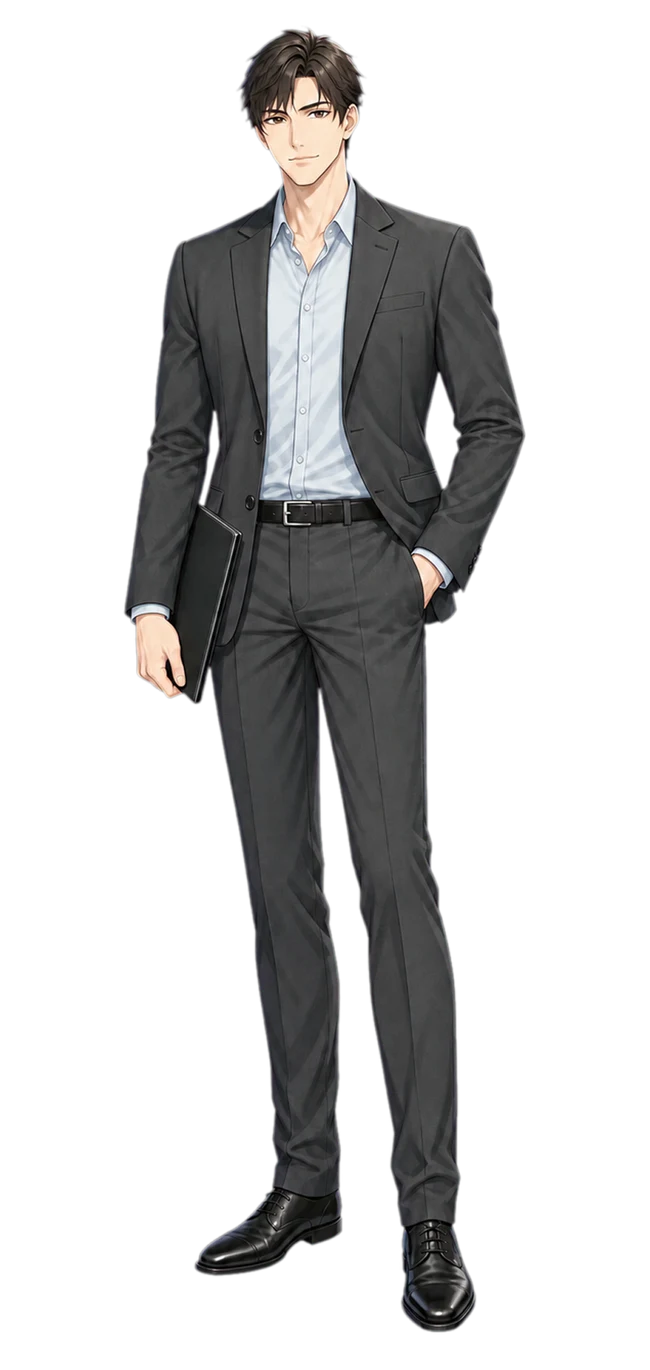
Keigo Takami
A producer at a commercial production company. An open-collar charcoal suit and document folder ground him in a contemporary workplace.
LOCATION STUDY / HONGO
Hongo · Kyudo Kaikan
From music to space
We chose Kyudo Kaikan first and foremost because it brings Eastern and Western cultures together in one building. We often use this kind of fusion in our music as well. Bringing that creative interest from music into the game’s choice of setting and art direction is an important reason we wanted to use this place.
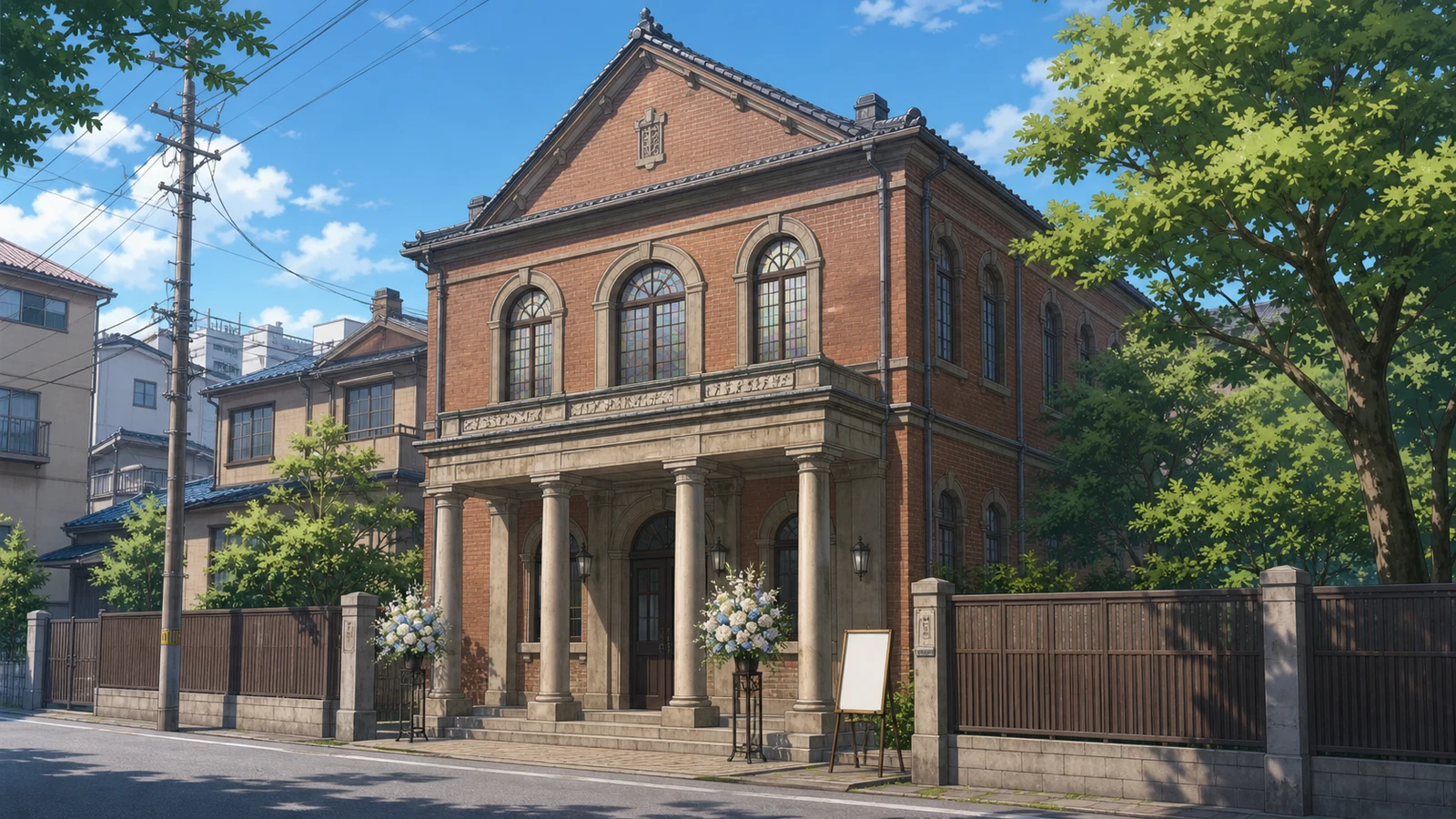
Hongo · Kyudo Kaikan exterior
Inspired by a real place
- Our art direction
- Brick and timber mass organize the frame around the entrance. Surrounding greenery softens the silhouette, balancing architectural presence with the neighborhood’s quiet.
- Why we chose this real place
- Its meeting of Eastern and Western cultures resonates with the fusion often used in our music. The exterior begins the experience of entering a space where these traditions coexist.

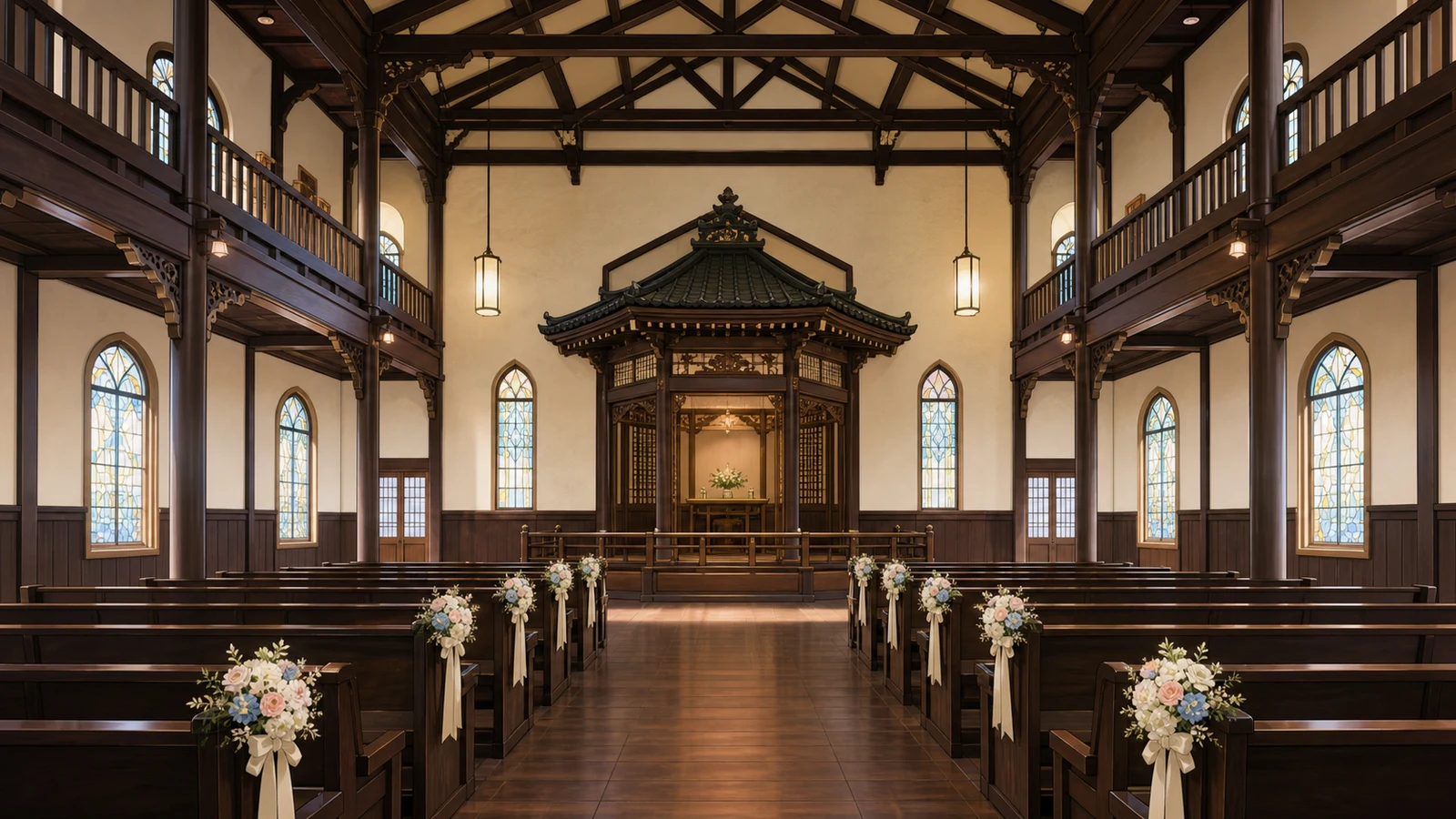
Kyudo Kaikan · Hall art study
Inspired by a real place
- Our art direction
- Repeated columns and beams lead the eye inward as warm timber meets colored glass. The central axis and layered sides turn the hall’s depth into visual rhythm.
- Why we chose this real place
- The cultural fusion can be felt through windows, timber and religious motifs sharing one frame. A creative interest familiar from music becomes an experience of space.
FROM RESEARCH TO DIRECTION
From architectural structure to a path for the eye.
Entrance proportions and brick mass guide the exterior composition; repeated columns, beams and the hall’s inward axis guide the interior. Light and color bring timber and colored glass into dialogue. Space for characters, a deliberate path into depth and the relationship between Eastern and Western architectural elements shape these images as settings for the work.
Designed by Goichi Takeda and completed in 1915, this Buddhist preaching hall brings together Western and Japanese religious architecture. Our art takes cues from its brick exterior, timber structure and hall depth to translate the building’s quiet character into a narrative setting.
Architectural background: Bunkyo City ↗These are game-art interpretations, not official venue photographs. Lighting and decorative arrangements belong to the work and do not document permanent on-site conditions. The scenes in which they appear remain unrevealed.
TOKYO / BACKGROUND STUDIES
Tokyo life, observed and imagined.
Fictional universities, neighborhood bookshops and recognizable Tokyo places share one 2D anime visual language. This is a city for studying, working and living, not only a collection of landmarks.
These backgrounds are works in progress and include AI-generated images, not final game visuals. Architectural details, lettering, brushwork and color are still being refined.
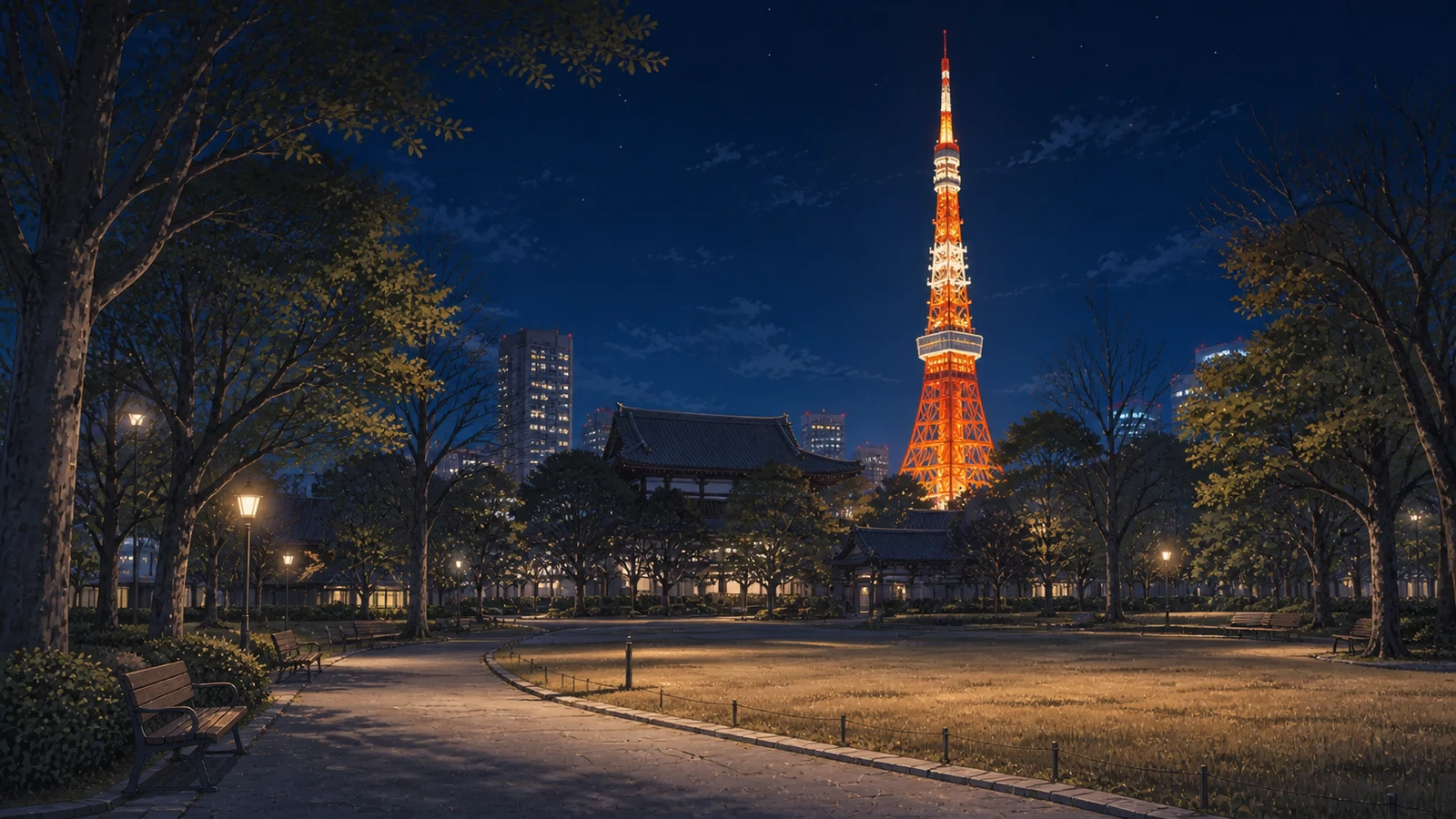
Shiba Park · Tokyo Tower
Inspired by a real place
- Our art direction
- Near trees, low rooftops and the distant tower establish layers of distance. Warm tower light against the night sky lets the city’s scale unfold from a human viewpoint.
- Why we chose this real place
- Attention can return from the famous tower to nearby trees and park paths. A landmark worth photographing and time spent beside someone can share one frame.

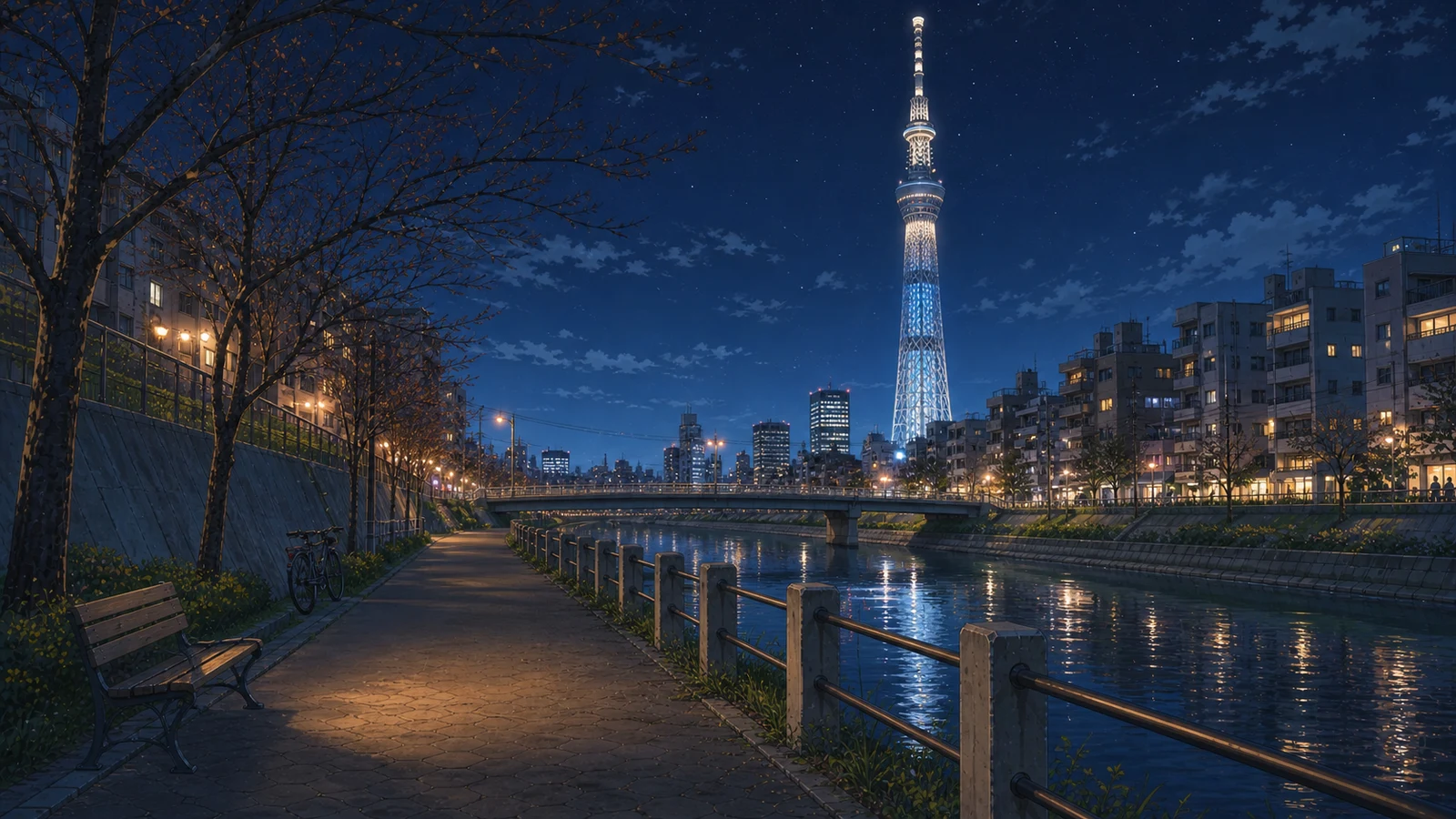
Kitajukken River · Tokyo Skytree
Inspired by a real place
- Our art direction
- The tower’s vertical is balanced by low riverside buildings and the breadth of water. Reflected light connects above and below, near and far, giving the city depth as well as height.
- Why we chose this real place
- Looking up at a landmark can coexist with waiting for someone by the river. Even in a huge city, a conversation can return to the distance between two people.

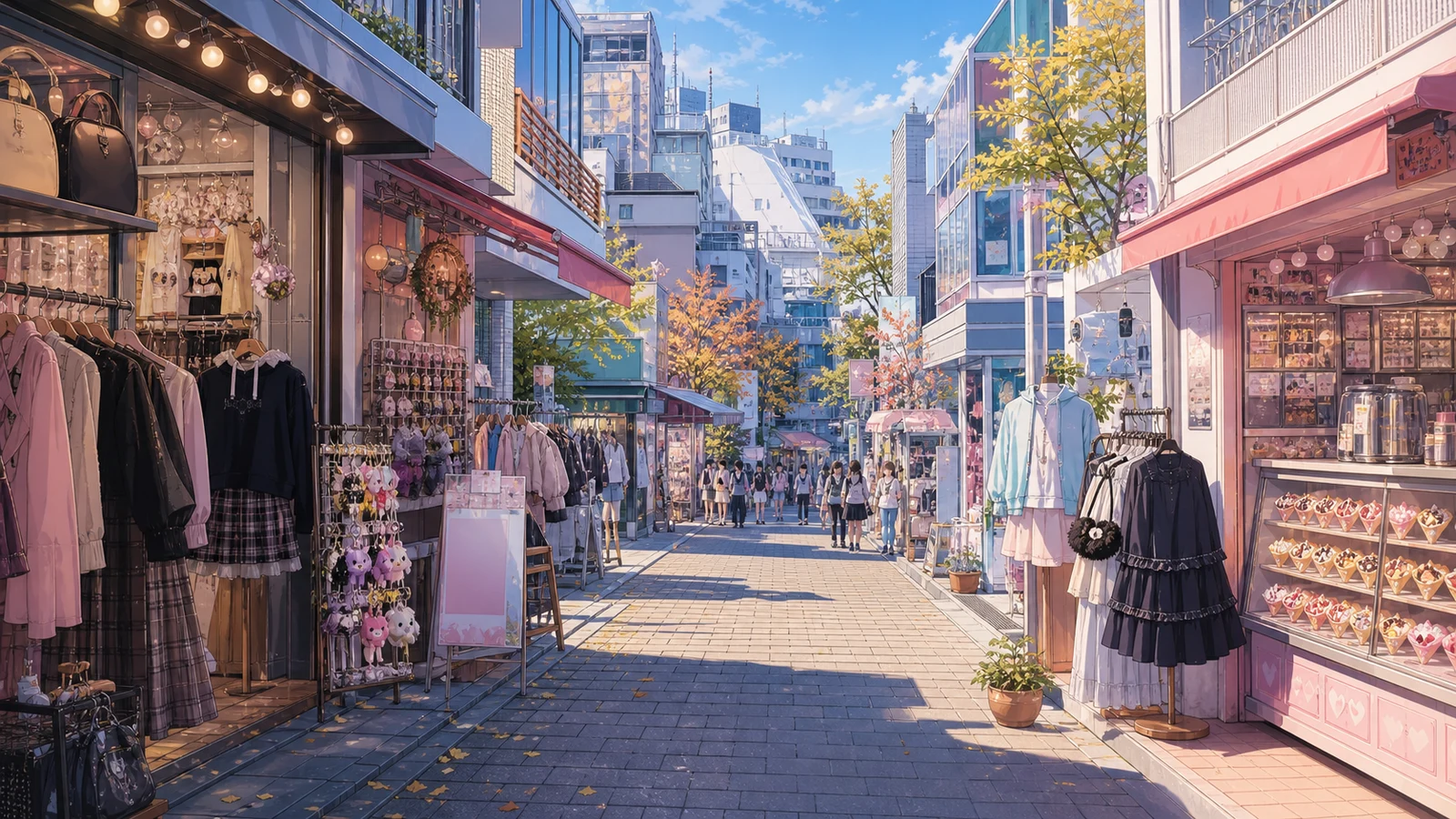
Harajuku · Takeshita Street
Inspired by a real place
- Our art direction
- Walking-height perspective organizes the narrow street and overlapping shopfronts. Varied color and sign density preserve a clear visual path within the bustle.
- Why we chose this real place
- Eating, sharing a bite and stepping aside make small actions feel natural. The lively street is experienced through ordinary behavior.

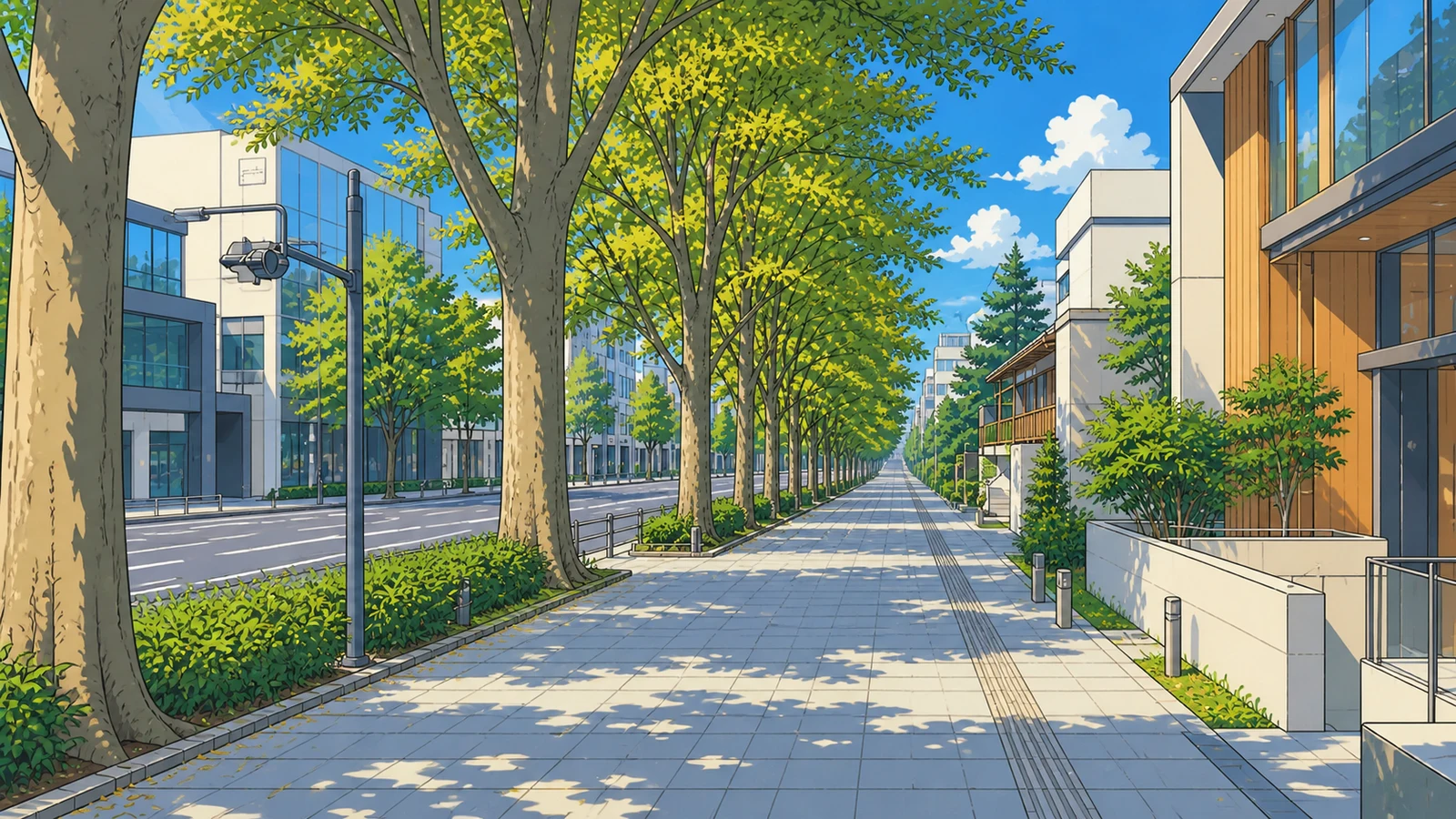
Omotesando in autumn
Inspired by a real place
- Our art direction
- Repeated trees and broad sidewalks create an unhurried rhythm into depth. Autumn color ties foliage to the street while keeping the openness of a pedestrian’s view.
- Why we chose this real place
- A walk past shops can open into curiosity about where the road leads. Its commercial life and sense of approach both shape what the characters notice.

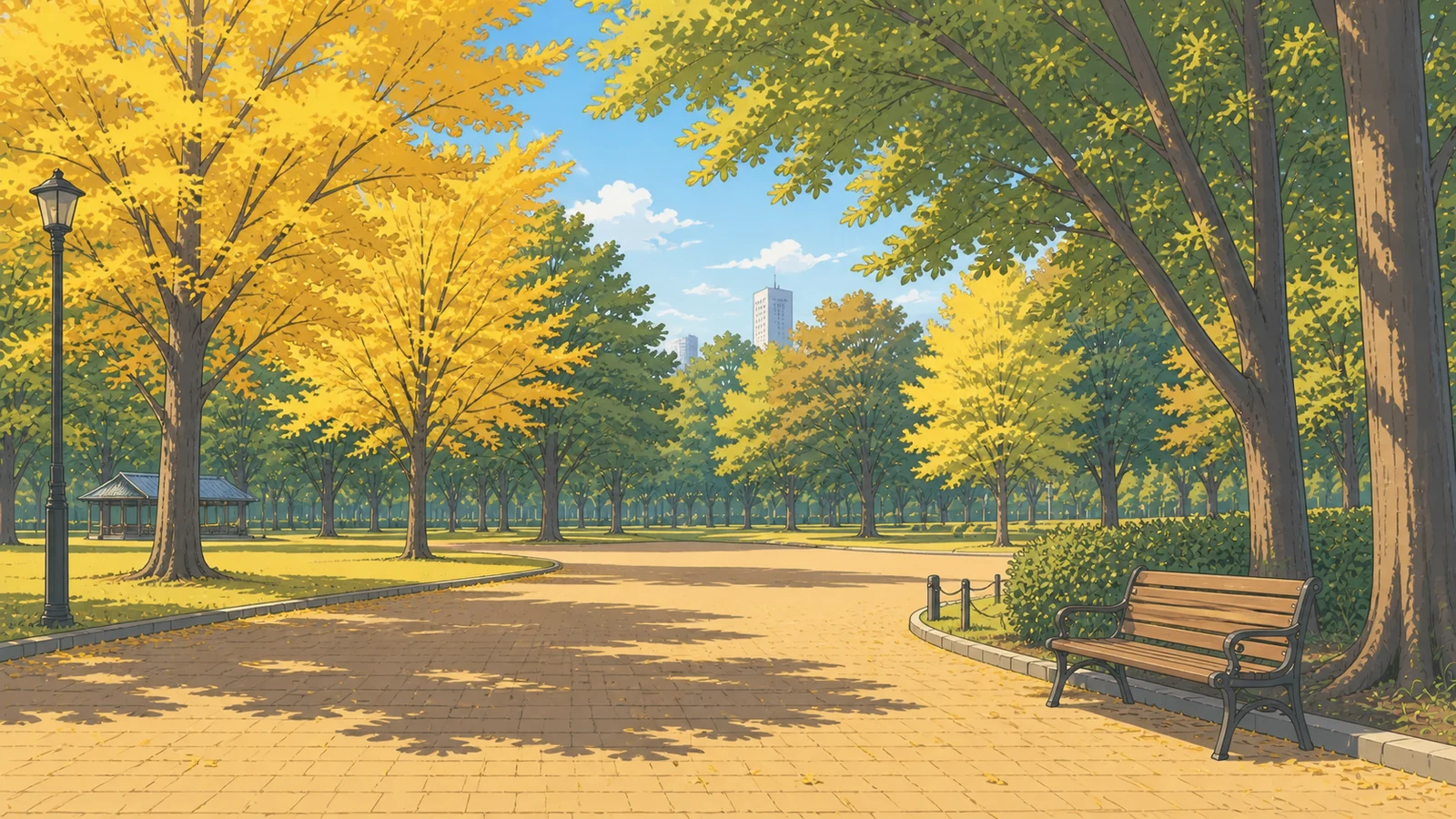
Yoyogi Park · Autumn afternoon
Inspired by a real place
- Our art direction
- Afternoon sunlight and shade form distinct tonal areas, with fallen-leaf color marking the season. A quiet foreground opens toward a brighter distance.
- Why we chose this real place
- The park offers a natural pause after walking. Its past connects to people running and resting here now rather than becoming a long lecture.

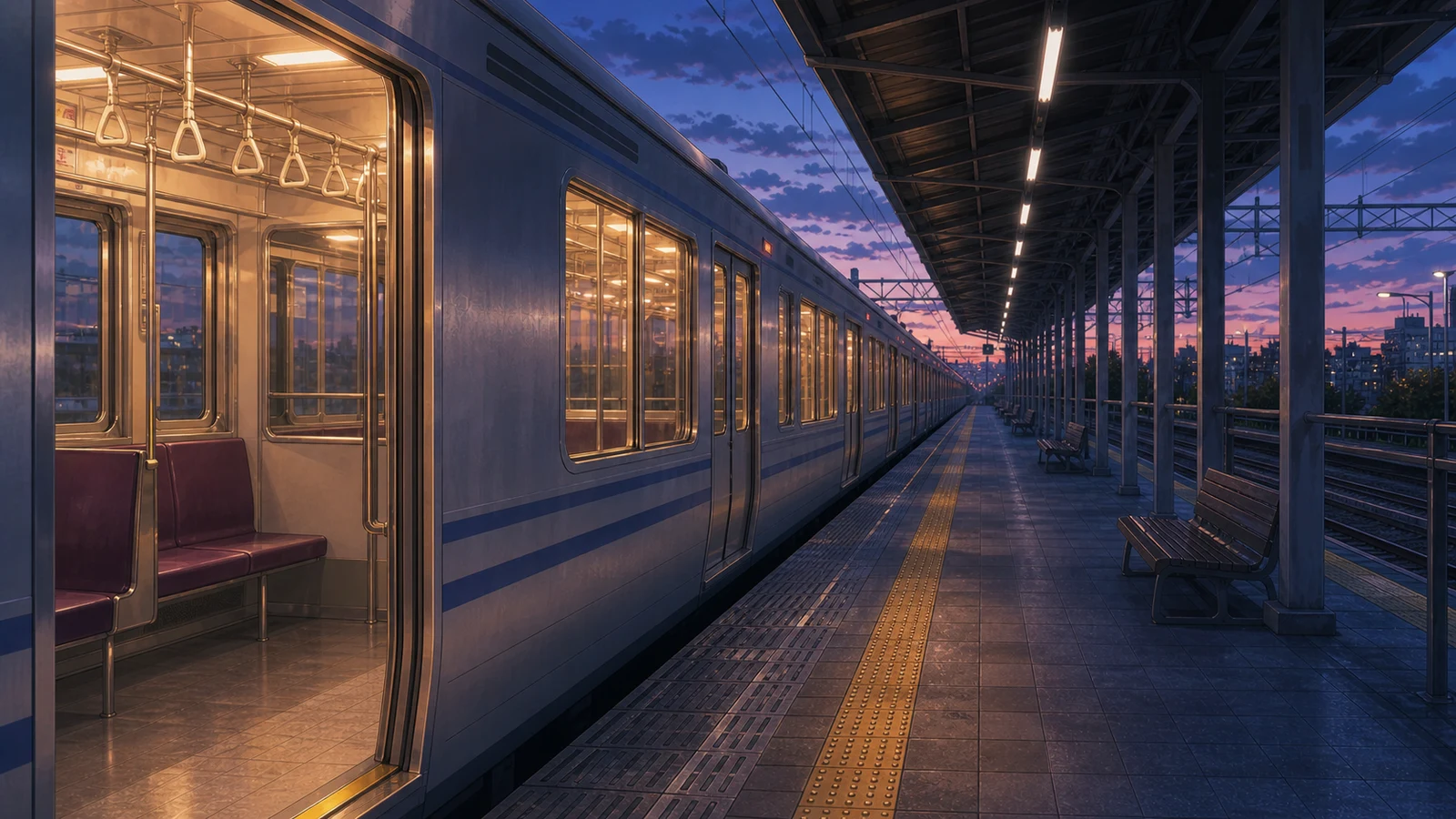
Harajuku Station · Evening platform
Inspired by a real place
- Our art direction
- Platform edges and converging rails bring waiting and the direction home into one composition. Evening light softens the outlines for the close of a day out.
- Why we chose this real place
- A day out needs a journey home. Trains and time bring the experience back to everyday life instead of ending in another landmark.

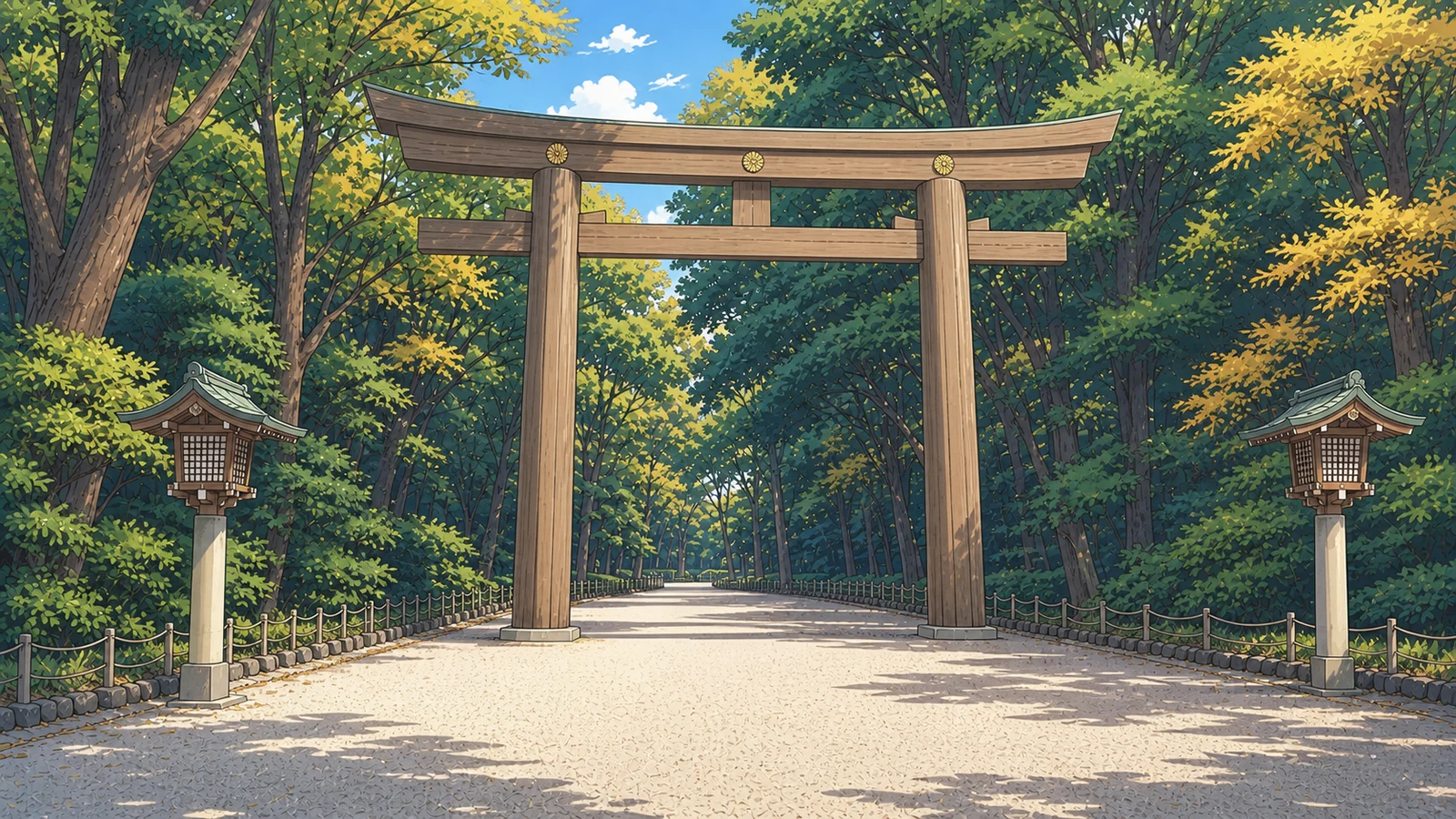
Meiji Jingu · Autumn approach
Inspired by a real place
- Our art direction
- Vertical trunks and the approach’s depth lead the eye quietly forward. Layers of green and shade give visual form to the transition from city streets into trees.
- Why we chose this real place
- Moving from city noise into trees naturally changes the pace of conversation. It lets people walk quietly together with thoughts still unresolved.

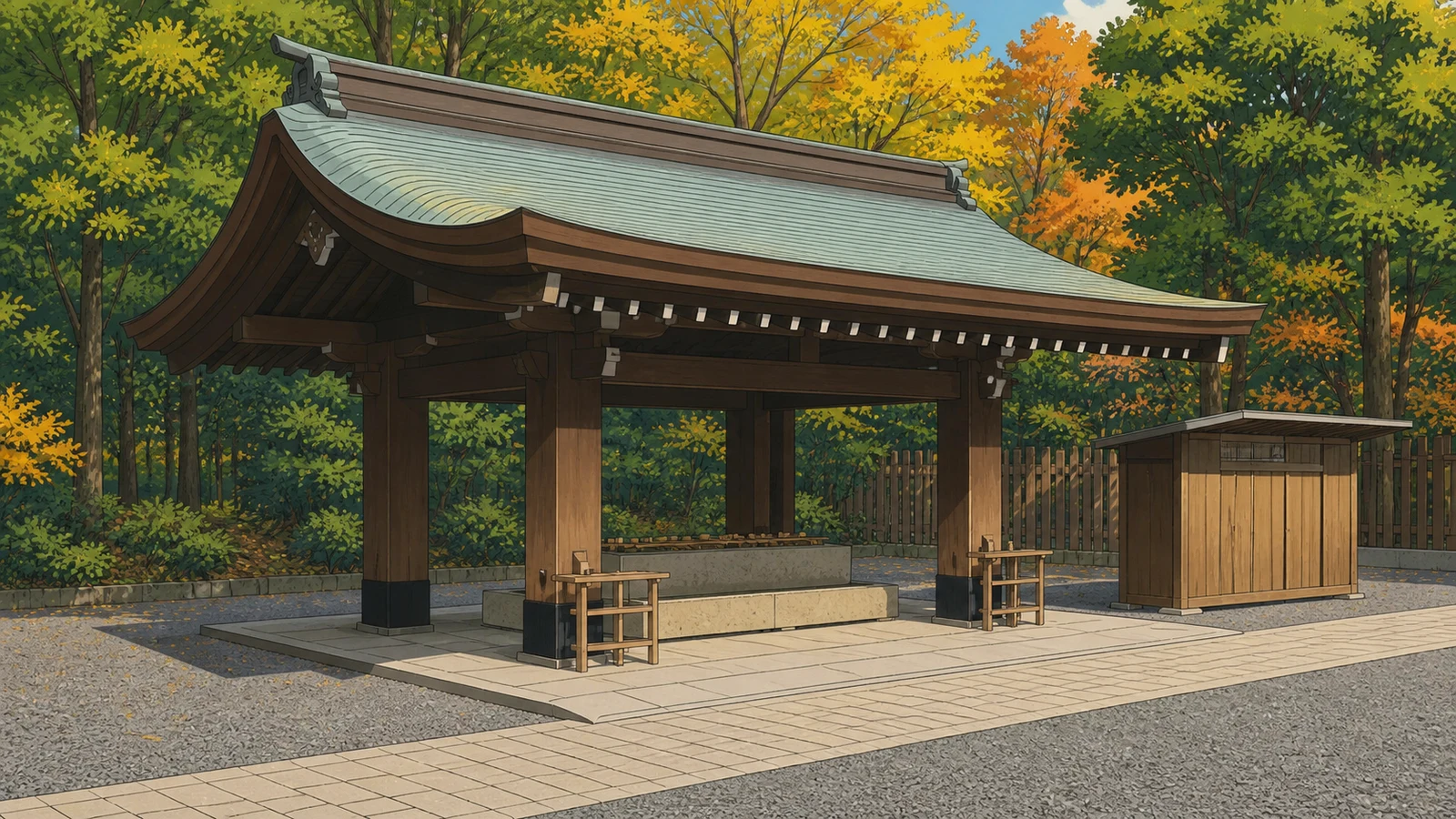
Meiji Jingu · South purification pavilion
Inspired by a real place
- Our art direction
- Roof, columns and basin form a legible spatial composition, attentive to where someone stands and the height of their hands. Architectural lines and water highlights create a quiet setting for small gestures.
- Why we chose this real place
- A place includes what people do there, not just how it looks. A separate view from the approach makes positions and use of the space legible.

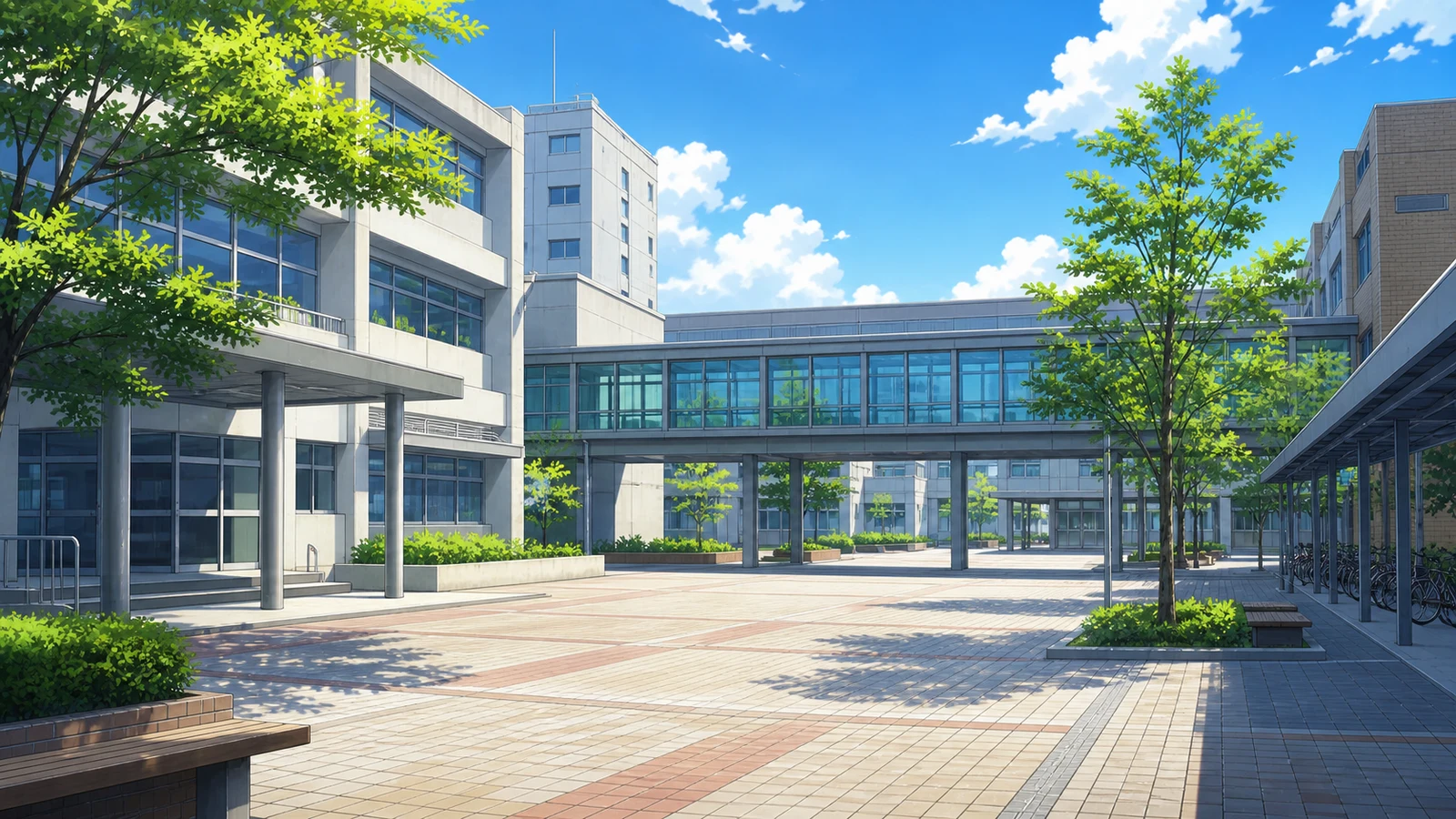
Toto University
An imagined setting
- Our art direction
- A fictional modern Japanese university designed for everyday attendance rather than grandeur.
- The idea behind this setting
- Tokyo youth is more than sightseeing. Paths to classes and distances between buildings establish that each character has a student life of their own.

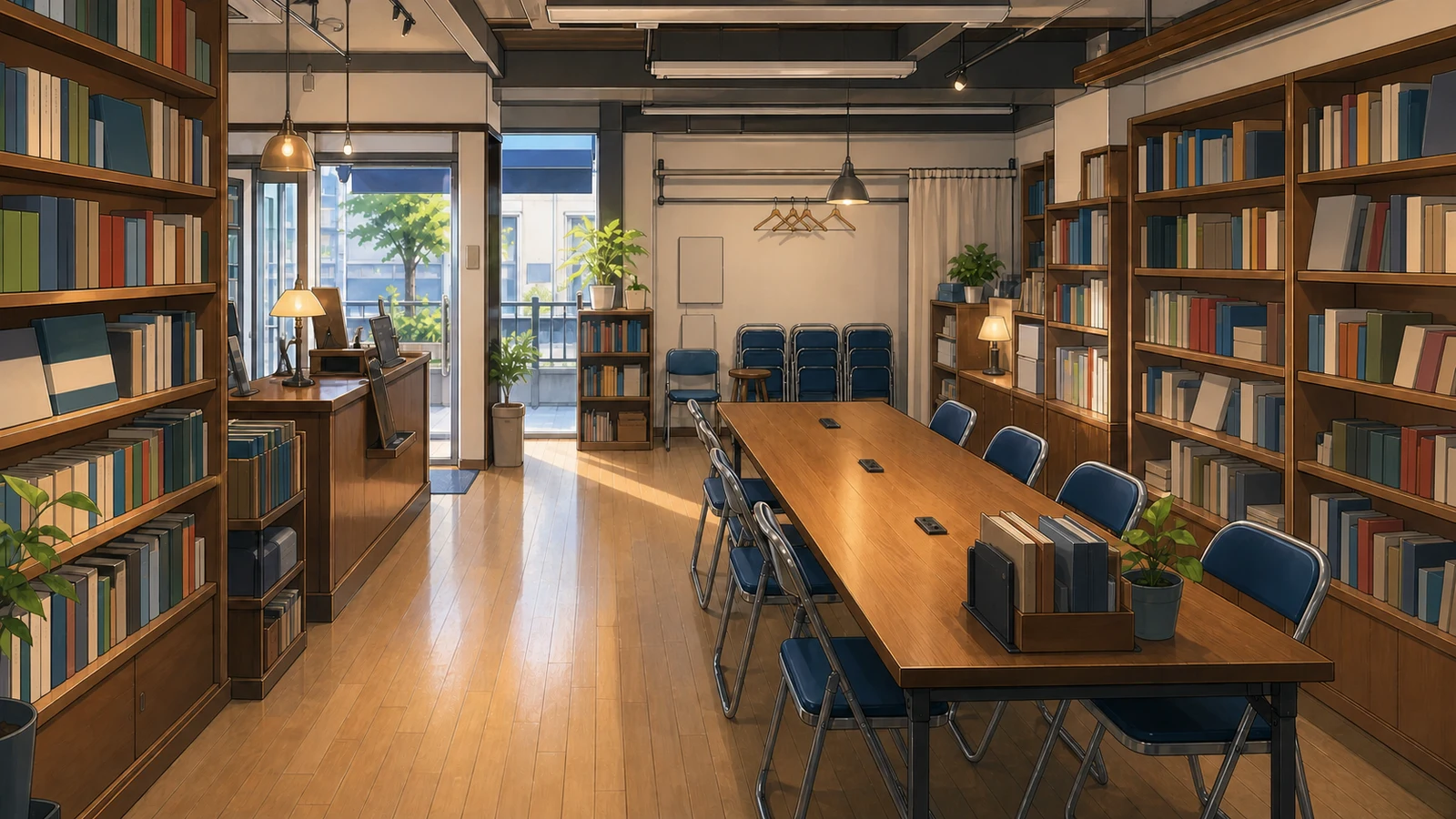
Yohakudo · Books and workspace
An imagined setting
- Our art direction
- Bookshelves and desks let reading and making share a room.
- The idea behind this setting
- Reading, working and talking meet here. Creation becomes work continued at an everyday desk, not only a flash of inspiration.

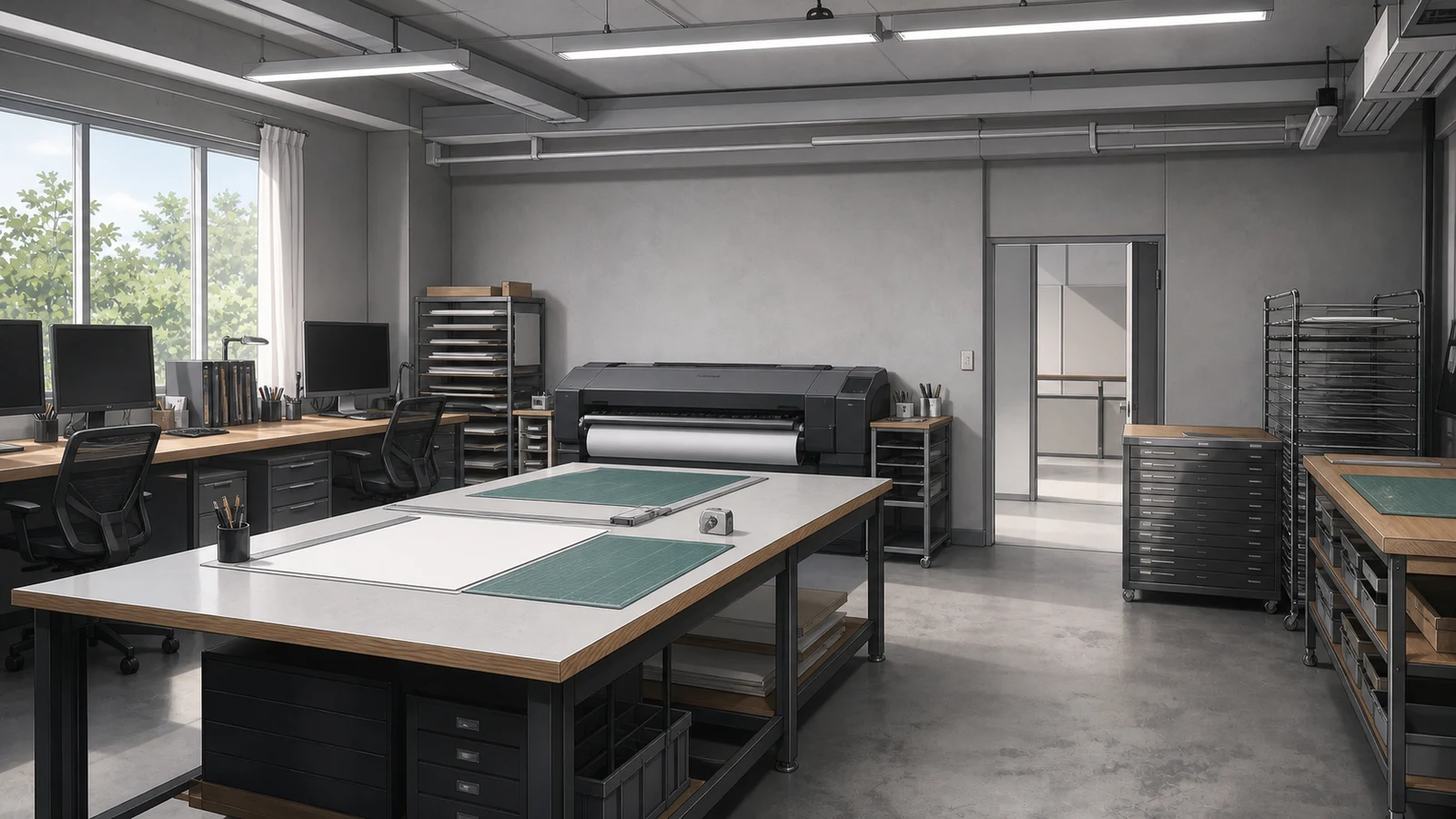
Koryo University · Photo room
An imagined setting
- Our art direction
- Tables, equipment and circulation give photographic study a credible working setting.
- The idea behind this setting
- A concrete workspace shows Hotaru as someone studying photography seriously, making room for selection, comparison and effort before a finished image exists.

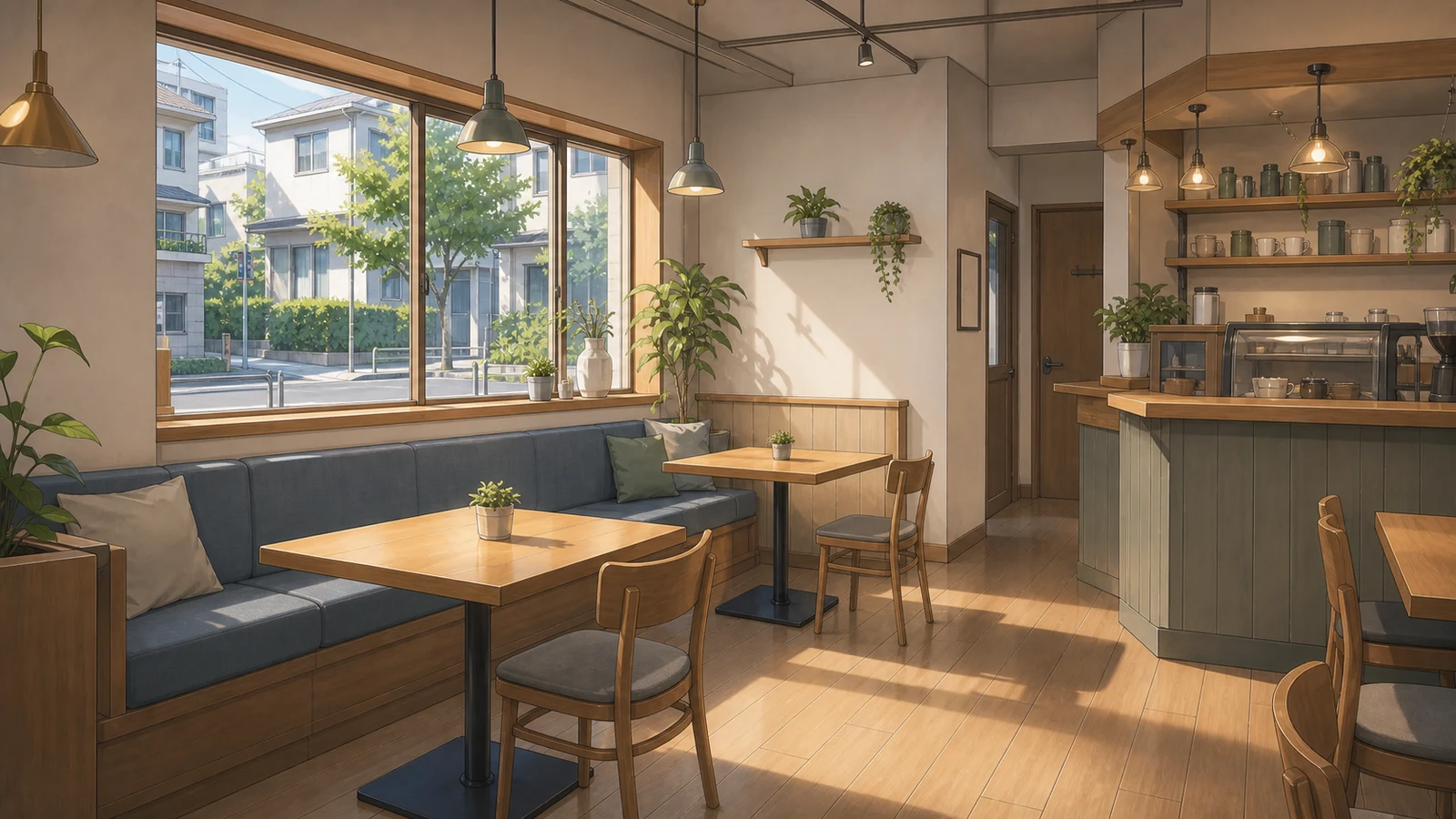
Tokyo corner café
An imagined setting
- Our art direction
- A neighborhood café preserves room for two people to talk.
- The idea behind this setting
- The characters need somewhere to be together when nothing dramatic happens. Ordering, sitting and talking also sustain a relationship.

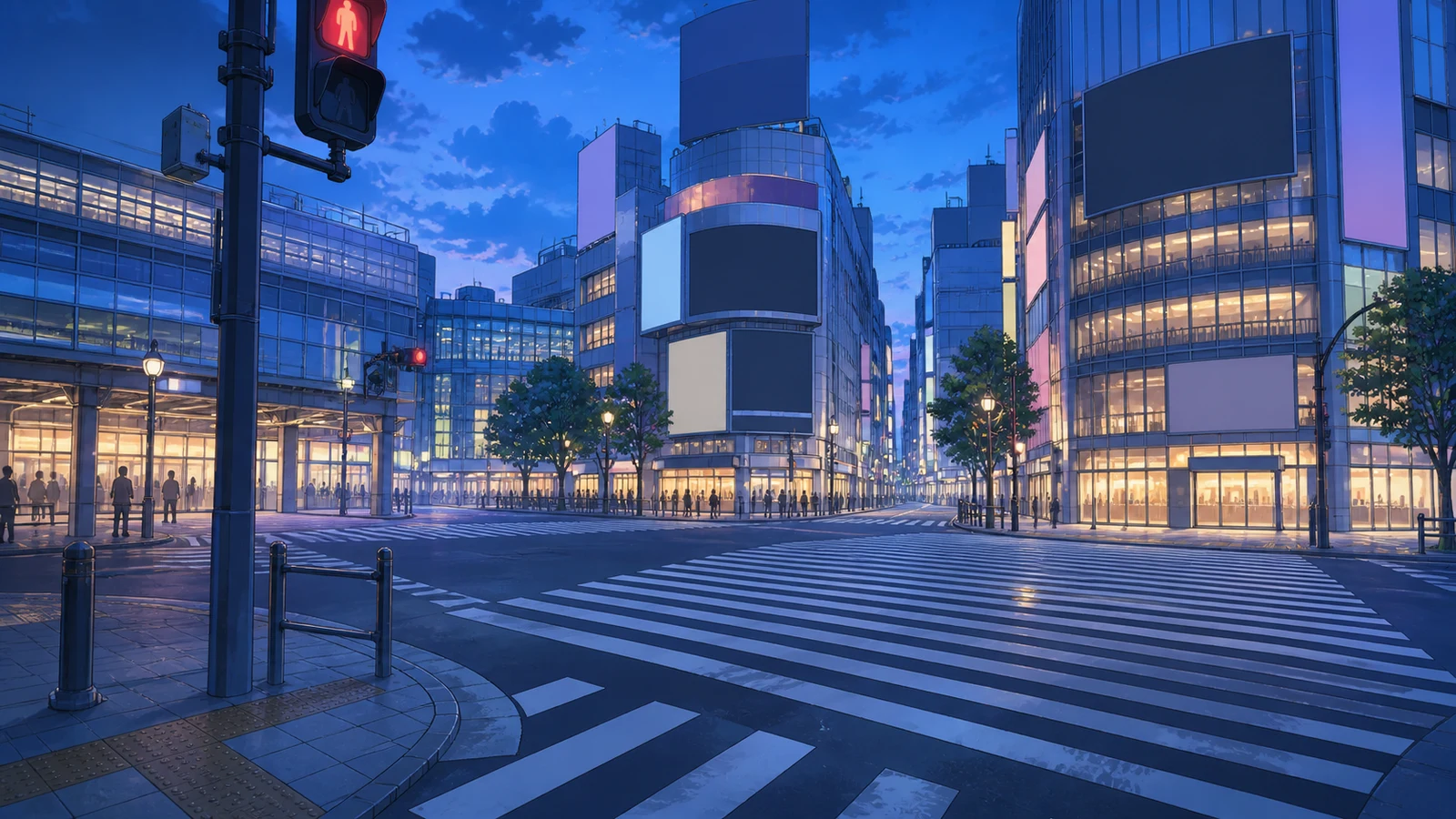
Shibuya Crossing
Inspired by a real place
- Our art direction
- Intersecting crossing lines set the visual rhythm as buildings layer into the distance. Geometry and spatial density carry Shibuya’s identity, keeping emphasis on composition rather than advertising text.
- Why we chose this real place
- Meeting and crossing turn “living in the same city” into action: finding one another within a large city and walking together.

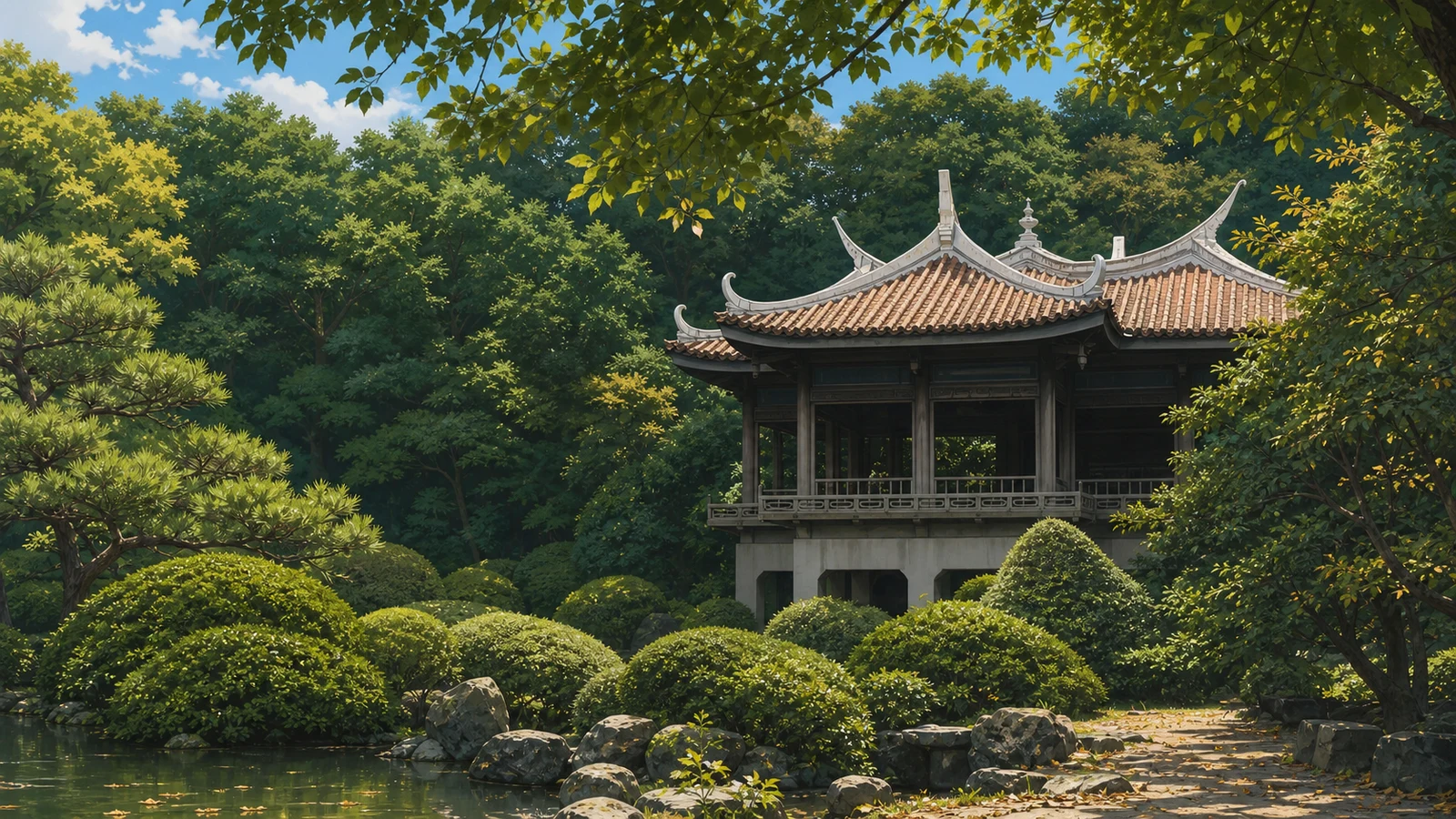
Shinjuku Gyoen · Old Goryotei
Inspired by a real place
- Our art direction
- The Old Goryotei’s red roof becomes a color focal point, leading toward the pond and autumn trees. Its roof silhouette contrasts with open water, bringing building and garden into visual dialogue.
- Why we chose this real place
- Walking, changing viewpoints and resting when tired form an ordinary rhythm. The pleasure is discovering a new way of seeing together, not testing landmark knowledge.

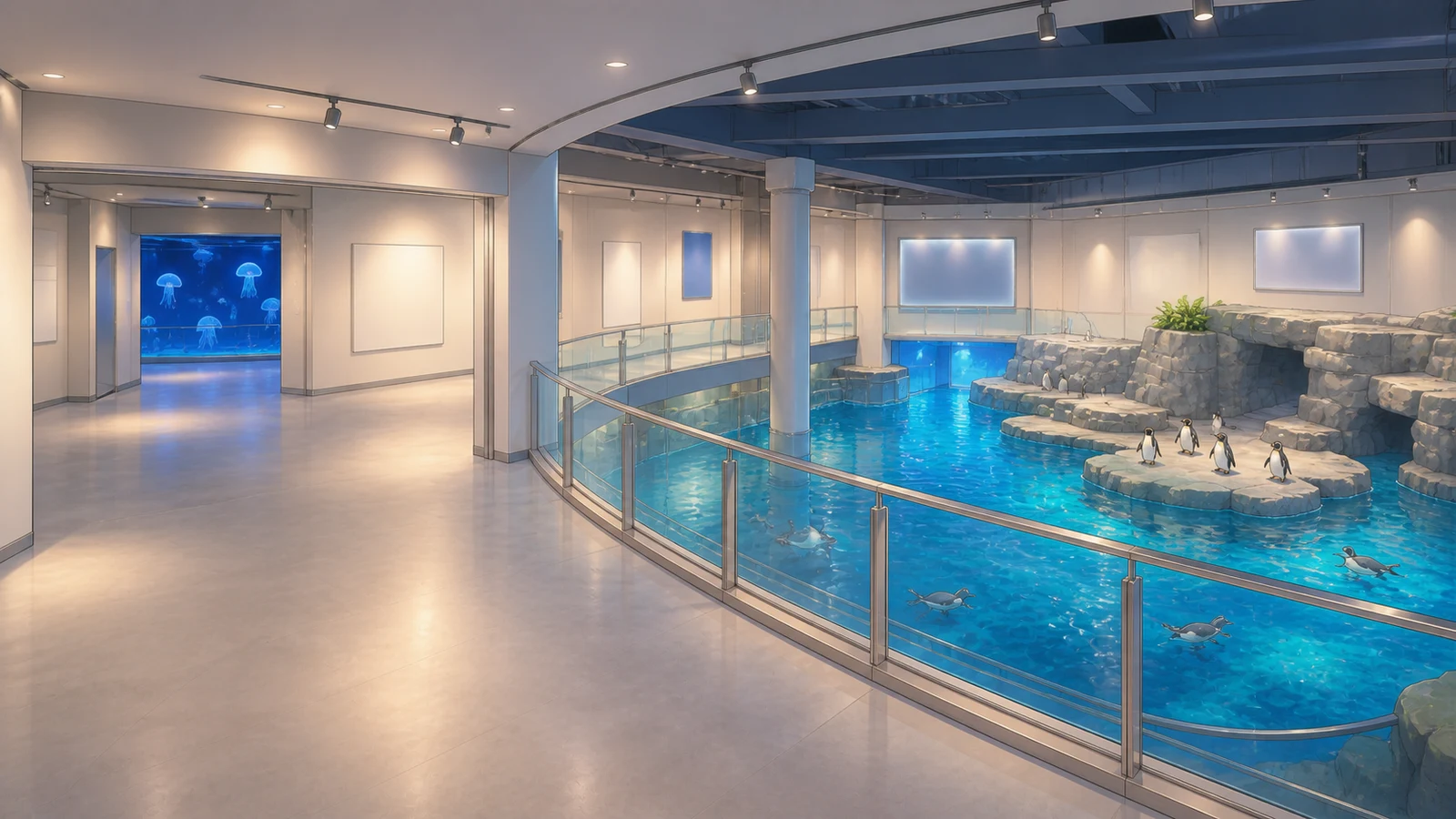
Sumida Aquarium
Inspired by a real place
- Our art direction
- This study contrasts the bright water of an open penguin pool with stable interior architectural lines. Reflections and overlapping levels explore a sense of openness and layered viewpoints indoors.
- Why we chose this real place
- Indoor water light and the connection between upper and lower spaces inspired this image. It is an art exploration, not a setting used in the current story.